Jesus, Decor, Accessories and Throw Pillows

In the 1990s, the Bristol neighbourhood of Stokes Croft was a hub of unchecked creativity. The vast Victorian façades, many of which had been abandoned to the elements, were a ready-made canvas for street artists such as Banksy and Robert Del Naja (also known as 3D), who became household names. Sound systems piled into squats while the police turned a blind eye, fostering global stars such as Tricky and Massive Attack.

Two decades on, and Stokes Croft is increasingly home to artisan coffee shops, burger bars and craft ale pubs that signify urban modernity. The graffiti, once a marker of lawlessness, is now consigned to council-sanctioned tourist sites.

Is urban regeneration about more than the material? Absolutely ”¦ It’s about a piece of heaven on earthDoug Anderson

But every Thursday evening, its proprietors meet here to worship, where they stand in a circle and smile knowingly at one another: more yoga session than sermon. This is the LoveBristol church. Its members pursue idiosyncratic beliefs within a loose structure — a belief in prophecy, speaking in tongues, and the power of the Holy Spirit in instigating modern-day miracles.Advertisement

They also believe in urban regeneration. The church runs a range of startups and social enterprises in the neighbourhood, including a second-hand furniture shop and a vintage clothes store. These enterprises, which generate funds for charities and community arts projects, channel the ethics of Bristol’s famous street art: an active, communal idealism and an earthy, back-to-nature spirituality. A prominent mural on the wall above LoveBristol HQ reads: “Think Local: Boycott Tesco.”

The church has even invested in the property market. The Stokes Croft ethos of collective living (in the past, many of the large abandoned buildings around here were home to squatters) survives in a rather more cosmopolitan iteration: LoveBristol has bought two community houses for members, part of a network of religious communes throughout the city.

‘Boycott Tesco’ graffiti in the Stokes Croft area of Bristol. There were riots in 2011 when the new Tesco store first opened.
 ‘Boycott Tesco’ graffiti above the newly refurbished Elemental bakery, which is run by church communities in Stokes Croft, Bristol. Photograph: LoveBristol

You don’t want areas to be deprived and people to have no opportunities ”¦ that’s what this area used to be likeNeko Griffin

In the context of Christianity, of course, gentrification takes on a new, existential dimension. This became clear in bizarre fashion last year, after a woman in Fort Mill, South Carolina, prophesied that Bristol was about to become “the healing capital of England”. Despite never having heard of Bristol, let alone visited it, she proclaimed that an “outpouring of healing is coming to that region … Seeds planted years ago have come to full maturity”¦ Winds of change are blowing and a changing of the guard is coming.”

3 Tips for Dealing with a Manipulative Project Co-Worker

Are you stuck working with a project manager who is manipulative and dishonest? If you are, you’re not alone!

Today’s workplace is a cut-throat environment with everyone trying to get ahead in some way, shape, or form. It’s no surprise that there are malicious, sneaky project managers who will do anything to get a leg up to succeed or survive, even if it means throwing you under the bus. Like a clever politician, these project managers keep their desires hidden, but underneath a friendly and charming exterior is a highly destructive individual whose goals are power and control. Pretending to pursue the greater good, he or she adopts the mantra of “company first” with a fervency that inspires admiration and respect, and most people accept his or hers claims of a selfless pursuit of noble causes.

Regardless of your industry, profession, experience level or company, these manipulative people exist and, if given the right opportunity, they can ruin your reputation and career prospects. They’ll tell you that the entire team hates you, thinks you’re arrogant, stupid, or incompetent, and attempt to manipulate you into believing that their opinions are objective facts. A study published in the Journal of Applied Psychology called it “social undermining” and “bottom line mentality.”

“According to a recent survey,  roughly 90% of folks who read this post are presently working with at least one person who, mentally, would be described as a manipulator”.

Proving yourself in a new organization is hard enough. When someone manipulates and lies about you, it can hurt your relationships, your reputation, and your career. Luckily, Project Journal has 3 tips for effectively dealing with this workplace danger.

1. Don’t Ignore Your Gut
I should’ve seen it coming. Unfortunately, there isn’t a clear-cut answer to the question “Friend or foe.” If you find yourself putting up your guard around a co-worker, you might wonder if you’re imagining things and being paranoid? Well, maybe you are, but under no circumstances should you ignore your feeling. From experience, this is often the very first sign of trouble. Weak leaders sometimes resort to emotional deceit as a weapon for getting things done. Try to consider facts objectively. Manipulation is normally felt, rather than heard or seen, so you must listen to your gut.

What makes you mistrust this person?  Do they constantly gossip? If so, be careful as those who gossip to you, will probably be doing the same about you too and like Mom always said, “If you don’t have anything nice to say, don’t say anything at all.” Plus, you don’t want to get caught up in the drama when people find out about this control freak’s gossiping.

Trust that you will be thrown under the bus when “stuff” hits the fan. If you’re still unsure, you should run their behaviour by objective people you trust. As trust is built on the foundations of a good relationship, instead of basing trust on someone’s words, observe their deeds.

2. Dealing with a Bad Apple
There’s a lot to be said for the old saying, “One bad apple can spoil the whole barrel.” Not only is that true for fruit, but it holds a lot of merit in the work environment. Rude behavior is contagious. Toxic manipulative employees have an unhealthy ripple effect that harms co-workers, managers, and subordinates alike. They lack positive personality traits, such as genuine concern for others, a generous and understanding nature, a desire to teach and encourage, a desire to have straightforward dealings with others. They dwell in a very dark place lit only by their own ambition.

“It takes just one malicious employee among the ranks to wreak havoc on your team’s culture.”

Healthy human interactions are not dominated by manipulation. If you feel you can’t trust them, don’t. Manipulators do not communicate openly. Instead, they resort to flattery or play the victim to gain your trust and sympathy. Through artful, indirect and devious methods, they influence and control others and have a fair amount of social support, most likely because no one wants to be on their bad side. But that doesn’t mean their behavior isn’t harmful.

Your priority in this situation must be to protect your professional standing. Begin documenting every instance of destructive behavior and take it to a higher authority. When a co-worker starts manipulating you and ignoring the behavior doesn’t work, distance yourself, if possible and keep all correspondences. When colleagues try to sabotage you, they might tell you lies to cause you to make mistakes. The more you cover yourself, the less you have to worry about. Change your passwords, shut down your computer when you leave your desk, and keep sensitive documents under lock and key. Remember to “choose your words carefully when sending emails so that things you write can’t come back to bite you. Unfortunately, if you lose your cool, you will be in danger of looking undignified.”

“When you know what a man wants you know who he is, and how to move him.”
’- George R.R. Martin, A Storm of Swords

It can be tempting to excuse the antagonistic worker who seems zealous about his job, but clearly, those employees may be undermining the entire workforce. Being direct lets the other person know you’re aware of their manipulative behavior, and in some cases, that may be enough to nip it in the bud.  If you stay out of their world of negativity, you will be a much more difficult target for their manipulation.

3. Counteracting Sabotage
Manipulators are blind to the serious defects in their character, but keenly aware of the slightest weakness or imperfection in others. They are judgmental, suspicious, demanding and calculating, all negative personality characteristics. Even their outward charm is cold and calculated. Before you can deal with the situation, you need to understand the impact.

Is it a small lie with little effect? Is it a big lie that requires damage control or even legal action? Consider how others might view the situation. Although it may be difficult, the best choice might be simply to move on as the people who make it in the long-term are the ones who are honest, hardworking and able to maintain their professionalism.

“According to a recent Wall Street Journal article, workplace sabotage is on the rise in this difficult economy.”

If you choose to directly address the situation. It is critical to use neutral language and tone of voice. Do not stoop to their level, it is important to keep your integrity. Consider having witnesses to your conversation so it’s not your word against theirs.

Your final action can be accepting an apology and moving on, or it can be reporting the lie to a higher authority. In extreme cases, it can be making a formal complaint or hiring an attorney. It’s smart to search for job postings, even when you have no intention to quit. Obviously, you don’t want to let one bad apple lead to your resignation but, if nothing else, knowing you have options can help you feel more empowered and in control of the situation.

Other signs sabotage may be in the works: You don’t receive a promotion or responsibilities you logically should have gotten; cold or averse behavior from management that is (seemingly) out of nowhere; sudden and unexplained alienation by individual co-workers or even entire cliques; or unwarranted and continuous kind behavior from someone that was formerly aloof, ambivalent or even aggressive.

Manipulative behavior is widespread, but fortunately, it doesn’t exist everywhere. Do you have manipulative co-workers? How do you dodge their requests and still manage to pave a successful career path?  Tell us what you think?

Love this article? Share it with your friends on Facebook

9 Inspirational Sayings from Dr. Benjamin Carson

Find out the mindset that transformed Ben Carson’s life, from a poor performing student to one of the greatest neurosurgeon in the world. Allow these quotes to inspire you to think bigger.

Read and be blessed.

  1. Sometimes you are unsatisfied with your life, while many people in this world are dreaming of living your life.
  2. A child on a farm sees a plane fly overhead and dreams of flying. But, a pilot on the plane sees the farmhouse and dreams of returning home. That’s life, enjoy yours.
  3. If wealth is the secret to happiness, then the rich should be dancing on the streets. But only poor kids do that.
  4. If power ensures security, then officials should walk unguarded. But those who live simply, sleep soundly.
  5. If beauty and fame bring ideal relationships, then celebrities should have the best marriages. But those who live simply, walk humbly and love genuinely!
  6. All good will come back to you!
  7. Man asks, “Where was God when Myles Munroe, wife and his associates were killed in a crash? He answers, “The same place I sat when John the Baptist my servant was beheaded. When Stephen my servant was stoned to death. When Paul my servant was murdered in Rome. The same place I sat when my only Son was brutally crucified, wounded, bruised and killed. I have not moved from my position.”
  8. I am the same. It is not the means of exit from earth that matters but the destination. Live simply. It’s all about God!
  9. If someone asks about your educational background, proclaim boldly that: Church is my college. Heaven is my university. Father God is my counselor. Jesus is my principal. The Holy Spirit is my teacher. Angels are my classmates. The Bible is my textbook. Temptations are my exams and overcoming Satan is my hobby. Winning souls for God is my assignment. Receiving eternity is my degree. Praise and Worship are my slogan.

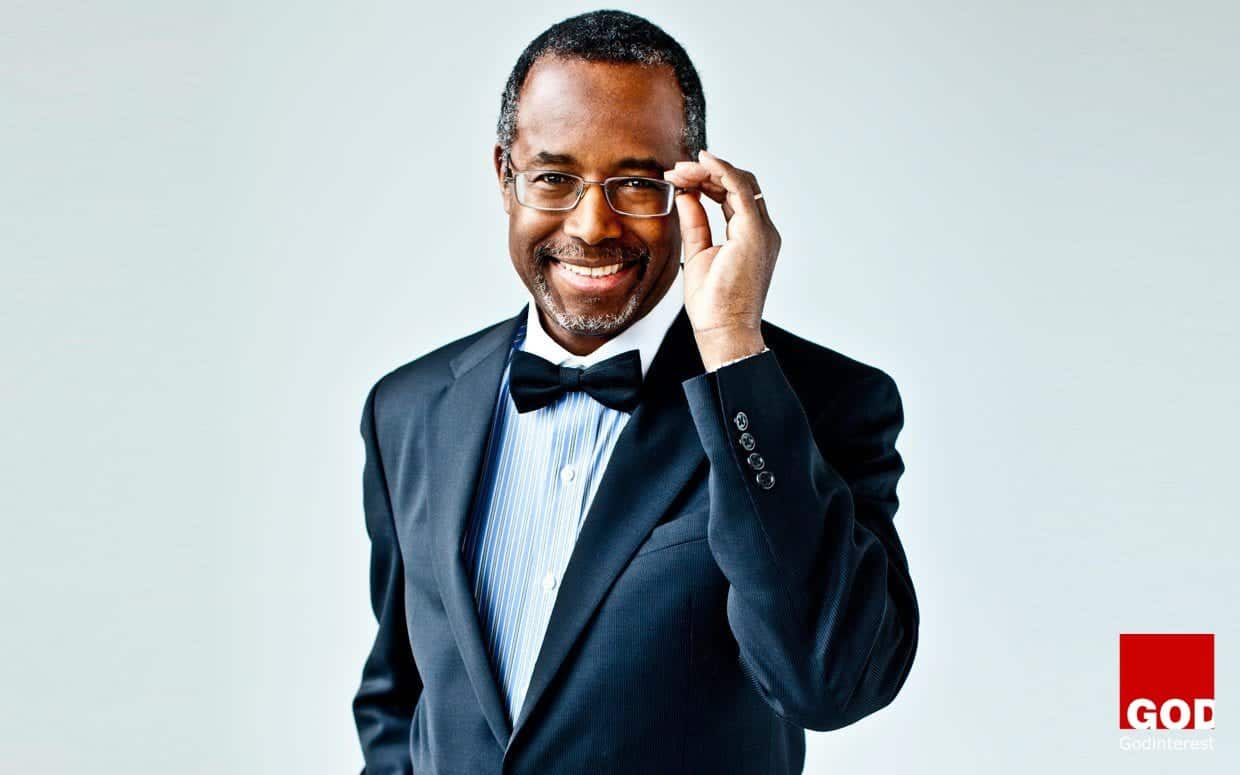
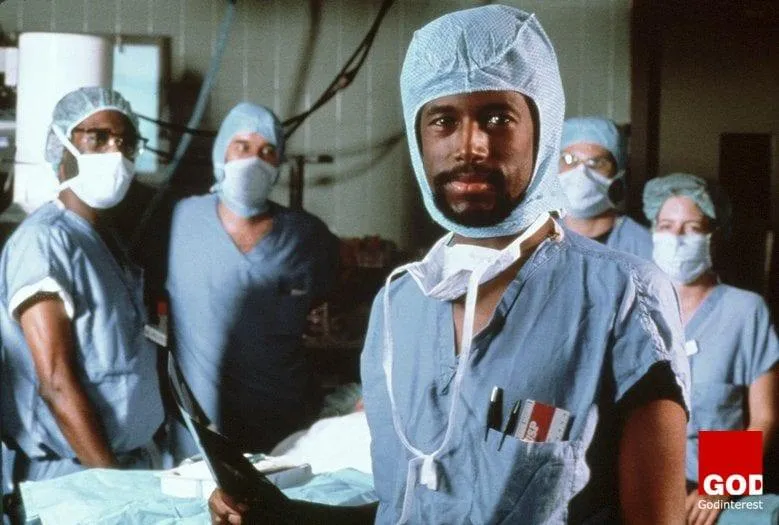
Benjamin Solomon Carson Sr.  (born September 18, 1951) is an American neurosurgeon, author, and politician who is the 17th and current  United States Secretary of Housing and Urban Development, under the  Trump Administration. Prior to his cabinet position, he was a candidate for  President of the United States in the  Republican primaries in 2016.  Born in  Detroit,  Michigan, and a graduate of  Yale University  and the  University of Michigan Medical School, Carson has authored numerous books on his medical career and political stances. He was the subject of a  television drama film  in 2009.  He was the Director of Pediatric Neurosurgery at  Johns Hopkins Hospital  in  Maryland  from 1984 until his retirement in 2013. As a pioneer in neurosurgery, Carson’s achievements include performing the only successful separation of  conjoined twins  joined at the back of the head, pioneering the first successful neurosurgical procedure on a fetus inside the womb, performing the first completely successful separation of type-2 vertical  craniopagus twins, developing new methods to treat brain-stem tumors, and reviving  hemispherectomy  techniques for controlling  seizures.  He became the youngest chief of pediatric neurosurgery in the country at age 33.  He has received more than 60 honorary doctorate degrees, dozens of national merit citations, and written over 100 neurosurgical publications.  In 2008, he was bestowed the  Presidential Medal of Freedom, the highest civilian award in the United States.

Politics and Project Management, a Lesson in Leadership

We all know that the more power you have, the better you are able to get the job completed. The problem is most project managers have lots of responsibility, but hardly any authority and since most projects exist outside core business structures, they are forced to develop other methods of influence.

One unspoken evil that is often ignored on project management training courses is the politics of project management. While most of us view politics with disgust; there is no refuting that effective project managers are often seen as those who are equipped and able to employ fitting political strategies to further their project goals. 

“In a Perfect World the Best Workers Would Be Promoted on Merit Alone and the Best Ideas Would Be Adopted Regardless of Personal Interest – but We Do Not Live in Utopia”

Have you ever included ‘office politics’ as a risk on your risk register? Probably not. Though, consider the potential implications of ignoring the ugly stepchild of project management?

“The Objective of Office Politics Is to Manipulate a Situation in Order to Achieve an Outcome That Will Benefit One Individual or Group at the Expense of Other Individuals or Groups.”

While it is unlikely that ‘office politics’ would be listed directly as a risk on your risk register, it is quite likely that one or more of the outcomes of it would. As a result, if you want to survive and prosper in the real world you need to combine good work with smart politics to ensure your own success and that of your projects. The biggest mistake a project manager can make is to assume that politics in project management doesn’t exist. After all, politics is human nature and has played an integral part in history since the dawn of civilization.

In a group where working interactions are fraught with tension and individuals have their own personal agendas or want to be “top dog” personal conflicts will often get in the way of the project aims. Issues between members of the team become the over-riding concern both for the individuals afraid and sometimes even the project manager. Meetings can consist of jostling for power or simply trying to justify your position and when that happens progress on the project will undoubtedly suffer.

For most project managers, playing politics is a form of slow, soul-destroying torture where logic, self-control, transparency and trustworthiness are replaced by deception, concealment, and sabotage. However, ignoring the external and internal politics surrounding your project or organization is dangerous. Successful project managers need to understand organizational politics and how to make them work for project success.

In the case of project politics you can use these key techniques in a constructive manner:

Carefully Manage Your Own Conduct

  1. The first rule is to at all times act in a way that commands respect and beyond that, respect others. That means not gossiping, spreading rumors or getting sucked into interpersonal conflicts and arguments. Maintain your honesty!
  2. Be positive as a positive outlook is a choice that you can always make and remain professional. 
  3. Be confident and firm but not hostile and make sure you take organizational perspectives, not a personal one when voicing objections or giving criticism.
  4. Always assume things will be disclosed, so don’t rely on confidentiality.
  5. Over time you will learn what works in your organization’s culture and what doesn’t. Try to watch other people and identify successful behaviors that you can model to navigate the political minefield.

Review the Organization Chart

  1. Sit back and watch for a while. Identify the real influencers, those who are respected, champions, those who have authority but don’t use it, the mentors and last but not least the true brains behind the organization. Then re-map the organization chart in terms of political influence as politics will often bypass the formal organization chart.

Understand the Social Network

  1. Once you know who’s who in the organization, you have to understand the social networks. This involves identifying who gets along with whom, groups or cliques that have formed and ongoing interpersonal conflicts. Over time you will learn who has the most trouble getting along with others and the basis for the interrelationship whether it be friendship, respect or manipulation, including how the influence flows between all parties.

Build Good Relationships

  1. Now you need to build multiple networks but avoid aligning yourself with one group or another this way you can keep your finger on the pulse of the organization.
  2. Don’t be afraid of politically powerful people and instead, develop relationships that cross the formal hierarchy in all directions.
  3. Build your relationships on trust and respect and avoid empty flattery.

Use Your Social Network

  1. You will need to learn to use your social network to stay clear of negative politics. You can do this through positive political action.
  2. Use your network to gain access to information, build visibility of your achievements and improve difficult relationships.
  3. Attract opportunities where you can shine and seek out ways to make yourself, your team and your boss look good.

Counteract Negative Play

“The Expression, Keep Your Friends Close and Your Enemies Closer” Couldn’t Be Any Truer When It Comes to Office Politics.”

  1. Your mapping of the organization will help you to identify those people who use others for their own political purposes, and not for the common good. Know that these people typically have low self-worth (that’s why they rely on destructive politicking to get ahead). Always be very careful what you say to them.  Understand what motivates them, their goals, and how to avoid or counter the impact of their politics
  2. Remember loyalty is not a reliable factor in the workplace!

“It is easy to become a target if you’re ambitious or if you strive for change. One of the biggest mistakes we make in our career is to assume that everyone likes progress. This is not true’Å —’Å many are content with the status quo and will defend it with their life.”

Projects are rarely easy and office politics can compound other sorts of problems that arise so they need to be dealt with swiftly and firmly. 

Story of ‘Samson’ Comes to Sight and Sound Theatres (Interview)

Sight & Sound Theatres rarely do anything small. So no surprise that its new show,  “Samson,”  is on an epic scale.

“This is our 27th original production,” Josh Enck, president and chief creative officer of Sight & Sound, told the crowd of almost 2,000. “And this is our 40th year. We started in 1976 and we are (now) the largest faith based theater in the world.”

Sight & Sound tells Bible stories. In the past, they’ve tackled the stories of Moses, Jonah, Noah, Daniel, Joseph and Ruth. Shows generally run a year and the tourism here gets a boost every spring when Sight & Sound opens a new show.

“It’s the biggest tourist attraction in the county, with an average of 800,000 people visiting the theater each year according to Sight & Sound.”

Plenty of souvenirs will be sold. The gift shop is filled with all things “Samson,” from magnets to T-shirts to mugs to water bottles.


10 Amazing Facts You Didn’t Know About Animals

Here, I offer ten amazing facts about animals that should affect how we think about them and how we treat them.

1. God communicates with animals

This is the best explanation for the migration of the animals to Noah’s ark. In Genesis, God told Noah to build an ark in order to save himself, his family, and the land-dwelling creatures from the coming flood. However, he didn’t tell Noah to go out and round up the animals. He told him to bring them into the ark (Gen. 6:19), which meant to simply receive them. When it was time for the flood to begin, the text says the animals “went into the ark to Noah” (Gen. 7:9). The only explanation for the actions of the animals is that God drew them to the ark. God communicated with them directly, and they responded.

Another example of God communicating with animals can be found in the experience of the prophet Elijah. When Elijah fled from Ahab, king of Israel, he went to an area east of the Jordan River. The Bible says God commanded ravens to bring him food while he was there, and they did (1 Kings 17:4-6).

These examples don’t tell us that God is in regular communication with the animals, but they make clear that such communication has occurred. It is certainly plausible that God interacts with animals more than we realize.

2. God cares about the well-being of animals

We often quote Matthew 10:29-31 to emphasize God’s concern for humans. In this passage, Jesus helped his listeners grasp the extent of God’s concern for them: If God cares about the death of a common bird, he certainly cares about the needs of humans. That isn’t all we learn from this passage, however. Jesus also gave us insight into God’s attitude toward animals. True, humans are “more valuable” than a common little bird, but Jesus didn’t say that animals have no value to God. In comparison to humans, the little sparrow has little value, but God still values the life of that little sparrow enough to be moved by its death.

It isn’t just that God notices the sparrow’s death, like one might notice that the wind is blowing. Jesus wanted his listeners to understand that God is emotionally invested in that sparrow. He cares about what happens to it; he just cares more about what happens to people. Once we acknowledge that God is emotionally invested in birds, i.e., animals, as well as humans, we are now talking only about a difference in the degree to which he is, not whether or not he is.

The story of Jonah also offers insight into God’s concern for animals. After Jonah preached and the people of Nineveh repented, Jonah expressed his displeasure at God’s decision not to send destructive judgment on the people. In confronting Jonah about his hard-hearted attitude, God reminded Jonah that not only have 120,000 people been spared, “many animals” were also spared (Jonah 4:11). The well-being of these animals mattered to God.

In addition, Scripture teaches that God is personally involved in feeding the animals. Psalm 104:14 is instructive here. It says God “causes” the grass to grow for the cattle. The Hebrew text uses the causative form of the verb “to grow” to reveal this. God isn’t simply passively watching nature take care of its own. Verse 21 continues this theme when it says the young lions “seek their food from God.” Pulling these individual examples together, the psalmist speaks of animals in general, saying, “They all wait for You (God) to give them their food in due season” (v. 27).

3. God enjoys animals

In Psalm 104:31, the psalmist declared, “Let the Lord be glad in his works.” Clearly the statement speaks broadly of all that God has created, but it is preceded by a long description of God’s interaction with animals–wild goats, rock badgers, beasts of the forest, young lions, animals both small and great (see vv. 18-30). In a few more verses, the psalmist used this same word translated “glad” to describe his own joy in God. He said emphatically, “I shall be glad in the Lord” (Ps. 104:34).

It isn’t difficult to fathom that animals bring God joy when we consider the joy we get from watching our own children. We even enjoy watching animals with whom we have no creative connection. Given that, it is understandable that the one who created all things would enjoy them.

4. Animals reveal God’s sovereignty

When Job complained that God had mistreated him, God pointed to creation to help Job understand his sovereignty. Animals figure prominently in his response to Job’s attempted indictment. God reminded Job that it is he who provides for the animals (Job 38:39-41). He appointed them their place in creation (Job 39:6). God also pointed out that he is more powerful than the feared Behemoth and Leviathan by the very fact that he is their creator (Job 40:19; 41:10). While they may be beyond Job’s reach, they are not beyond God’s.

In response, Job acknowledged God’s sovereignty. He said, “I take back my words and repent in dust and ashes” (Job 42:6). The fact God used examples from the animal world to convince Job of his sovereignty suggests strongly that this is part of God’s intended purpose for his creation of animals. God has built wonder into animals, and by design, they point humanity to him as the great and only sovereign.

5. Animals bring glory and praise to God

In Psalm 148, the psalmist called on everything to praise the Lord. He included in this call sea monsters, beasts, cattle, creeping things and birds (vv. 7, 10). The final verse of the final psalm of the entire psalter reads: “Let everything that has breath praise the Lord. Praise the Lord!” (Ps. 150:6). Even though they don’t do so with words, animals still bring glory and praise to God.

By their very existence animals: (1) Point to God as creator. Animals are as much the product of God’s creative energy as any other part of creation. (2) Point to God as love. God loves life so much he creates it in seeming endless variety. (3) Point to God as designer. Animals fill a crucial part of the symbiotic relationship between all of creation. (4) Point to God as artist. Animals are a living display of the natural beauty God has built into creation.

6. Animals are reasoning creatures

Some deny that animals are capable of reasoning. They prefer to credit instinct for their decision making skills. They believe that animals are “as smart as they need to be” to survive. I believe this is simply not accurate. Animals are smarter than they need to be. I have witnessed my dogs on many occasions trying to communicate with me. They make up for their lack of language by finding other ways through their reasoning abilities to communicate their will.

In the Bible, God reveals animal intelligence through the unusual encounter of Balaam with his donkey (Num. 22:21-33). In that incident, the donkey saw the Angel of the Lord standing in the way and moved aside. Balaam became angry with the donkey because it wouldn’t obey him. Yet the Angel of the Lord credited the donkey’s quick thinking for Balaam’s deliverance. He declared, “The donkey saw me and turned aside from me these three times. If she had not turned aside from me, I would surely have killed you” (v. 33). The donkey recognized the danger and made a decision to get out of the way of the Angel, whom Balaam couldn’t even see.

Furthermore, we have all seen animals use tools to get food. They don’t need to use tools to eat. They have sources that don’t require the use of tools, but they have the reasoning capacity to know that a tool will help them get food. Also, we have all seen animals run from danger. How does an animal know it’s in danger? It must understand something about life in order to seek to protect itself. We credit reason for human responses to avoiding danger. Why wouldn’t we credit animals with reason when they do the same thing?

We cannot completely eliminate the concept of instinct as we think about animals, but at the same time, we shouldn’t rule out the evidence that animals are also capable of reason.

7. Animals may have a more acute awareness of spiritual reality than we realize

The incident of Balaam and his donkey brings into focus another insight about animals. It reveals that it is possible for animals to see angels (Num. 22:21-33). In that incident, Balaam was spared death at the hands of the Angel of the Lord because Balaam’s donkey “turned aside” when it saw the angel. The text does not say the Angel of the Lord revealed his presence to the donkey. It tells us simply that the donkey saw the Angel.

Humans see angels when the angels want to reveal themselves. The donkey saw the Angel of the Lord without his self-revelation. In fact, judging from the Angel’s comments to Balaam (see v. 33), the donkey was actually acting contrary to the Angel’s intentions. We could understand it if the Angel said he wanted the donkey to help Balaam avoid the fate he had planned for him. But the text does not say that. A plain reading of the text suggests that the donkey was actually frustrating the plan of the Angel. The donkey saw the Angel without the Angel’s assistance.

This conclusion gains further support when we see that the Lord had to empower the donkey to speak (v. 28). If Moses recognized the need to tell the reader the Lord empowered the donkey to speak, he could just as easily have said the Lord enabled the donkey to see the Angel of the Lord. Yet, he doesn’t tell us that.

While we should not attempt to develop a major doctrine around this single event, it still raises significant questions about our understanding of the relationship of animals to the spiritual world.

8. Animals have the capacity to enjoy life

The psalmist was lighthearted when he described the joy animals feel. In Psalm 104, he said God formed the sea creature Leviathan “to play” in the sea (v. 26). The Hebrew word translated “play” occurs fairly regularly in Scripture. King David used this word to describe his celebration as the ark of God was being brought to Jerusalem (2 Samuel 6:21). He was ecstatic. The psalmist said this beast of the sea can also be ecstatic.

The book of Job supplies additional insight. There, God, himself, described the joy animals experience. He mentioned the ostrich flapping its wings “joyously” (Job 39:13), and the beasts of the field “playing” in their surroundings (Job 40:20).

This isn’t some foreign concept to us. We have all seen animals playing. The testimony of Scripture and our own experience remind us that animals are more than automatons driven by instinct. They are beings with the capacity for joy.

9. Animals teach us about the nature of justice

In Robert Bolt’s play, A Man for All Seasons, Sir Thomas More delivers a brilliant summation of God’s purpose for creating the angels, animals, plants, and humanity. Regarding animals, he observes God created them “for their innocence.” It is difficult to find a better description of animals than this. Animals appear to lack the capacity for moral reflection. They simply do what they do. Scripture supports this understanding. It was humans who ate from the tree of the knowledge of good and evil, not animals (Gen. 3:1-7).

This observation of animal innocence is not only important for our understanding of animals. It also helps us understand our sense of justice. When we ask why we are offended by cruelty to animals, we recognize we are reacting to an innate sense within us that is repulsed by wanton violations of their innocence and vulnerability. This recognition helps us understand some of our motivations for our criminal justice system. When we punish acts of aggression against our fellow humans, we are responding to violations of their innocence and vulnerability. Such violations should be punished. Our sense of justice demands it.

Furthermore, we learn about divine justice from animals. Israel’s biblically mandated practice of substitutionary atonement provides this lesson. Scripture teaches that rebellion against God is sin. God’s holiness demands a penalty in response to this rebellion. In other words, God requires justice. Either the guilty person or an acceptable substitute must answer for human sin. God created the sacrificial system in Israel to help his people understand this reality. He commanded that this system regularly kill innocent animals in order to satisfy the demands of his divine justice (Lev. 16:1-34). The innocent animals would bear the sin of the people. This bloody display served as a symbol for what was yet to come–when the innocent Son of God would offer himself as the true, eternal, substitutionary sacrifice for the sin of all humanity (Rom. 3:21-26; 2 Cor. 5:21; Heb. 10:1-18).

10. Animals belong to God

Psalm 24:1 states without reservation–“The earth is the Lord’s, and all it contains.” This fact is repeated regularly in Scripture. While God commanded the first man and woman to “rule over” every living thing (Gen. 1:26), He was not relinquishing ownership of every living thing.

In fact, God did not relinquish ownership of anything (Col. 1:16; Rom. 11:36; Heb. 2:10). He put the man and the woman in the Garden to “cultivate it and keep it” (Gen. 2:15). He even gave humans authority over it, and after the Flood, he gave us all of the rest of creation for food. But none of this assignment of authority and power included a transfer of ownership. Humans serve a stewardship role toward creation, not an ownership role (Gen. 2:15). This stewardship pertains to everything and is intended to include an attitude of respect (Lev. 25:3-5; Num. 35:33). The animals are subject to humans, but they are not ours to do with as we will. They belong to God (Job 41:11; Ps. 50:10-11).

Conclusion

The reader will no doubt notice that most of my biblical references are from the Hebrew Scriptures. When one looks to the New Testament for evidence of the place of animals in God’s creation, there is less to work with. There are good reasons for this dearth. First, the New Testament is built on the revelation before it. It assumes the foundation of the Hebrew Scriptures. So, there is no need to repeat what has been previously stated. Unless the New Testament affirms that its teachings supplant the teachings of the Hebrew Scriptures, we are to accept their infallible guidance and truth as we do those of the New Testament. Second, the New Testament is dealing principally with the establishment of the church. The writings that comprise it are mostly related to the immediate demands of this endeavor.

Drawing from this entire biblical witness, we can make some important conclusions about how to think about animals. First, we must recognize that animals may very well be co-inheritors with us of the new creation. When we consider that animals were part of God’s original design for his creation, it is plausible that they are part of his eternal design, as well. In his letter to the church at Rome, the Apostle Paul said all of creation was subjected to the corrupting effects of the Fall and that the day is coming when it too shall be freed from this corruption (Rom. 8:18-22). There is no reason to suspect that animals are not part of this vision of a redeemed creation. The prophet Isaiah saw a day when humans and animals would live once again in perfect harmony (Is. 11:6-9). The Apostle Paul may be telling us this is a vision of eternity, not only of the millennium.

I’ll confess that I am not one who believes that animals go to heaven when they die. I don’t see any biblical evidence for this. But given these statements from Isaiah and Paul, we should give more consideration to the place of animals in eternity. They may not be the same animals we have come to love in our lifetimes, but it seems they have a future beyond the Fall. Whether we are talking only about the millennium or about all of eternity, animals deserve to be treated with the dignity such a future bestows.

Second, we must lose some of our anthropocentric view of creation and replace it with a theocentric view, where God is engaged with all of creation, not only humanity. While a theocentric view of creation should not cause us to equate humans with the rest of creation, it should cause us to treat the rest of creation with more respect. God is interested in all of creation, not only humans. After the Flood, he covenanted with all flesh on the earth, including the animals, never again to destroy the earth with a flood (Gen. 9:11-17). The fact that God would enter into a covenant with the animals tells us something of his love for them. We, therefore, should be more concerned about all of creation, including animals, too.

Third, these biblical truths about animals mean we should be engaged in activities that help the rest of creation fulfill God’s design and interest in it. Possibly, we don’t know all that means. For example, who would have guessed that God would use the ravens to feed his prophet? He might very well be doing similar things in some part of the world today. Consequently, we should help to empower creation, not as its slaves or its equals, but as its caretakers.

Fourth, we must abandon unbiblical notions about animals and embrace a more biblical view of our animal co-inhabitants. The Bible compels us to develop a better appreciation and respect for them. I’m glad science is revealing many enlightening truths about the animal world. But it is clear that Scripture has already revealed much of what science is discovering. Animals are much more complex than they at first appear to be. We should do all we can to better understand them and their place in God’s creation. It will not only be good for them, but us as well.

God put animals on the planet and gave them a mandate as well. Part of the human calling is to help them fulfill this mandate in a way that enables them to reach their full potential in creation. They not only enrich our lives. They point to the creator of all things. Animals are not only worthy of our respect. They deserve it.


Super Prisons to Replace Victorian ‘Hell Holes’, But Would God Use Prisons to Rehabilitate?

Giddings Confirmed as Adviser on  £1.3bn ‘Super Prisons’ Programme, But Would God Use Prisons to Rehabilitate?

 Former Argent partner Tony Giddings has been confirmed as development adviser on the £1.3bn “Super Prisons” programme,  the first of which  is already being built in Wrexham.

Chancellor George Osborne and Justice Secretary Michael Gove unveiled the  major new prison reform programme including plans to build 9 new prisons in last year’s spending review, with five of the new prisons to  be open before the end of this parliament. The government will also expand existing prisons in Stocken and Rye Hill.

Giddings said “he was hoping to instil the Argent ethos of “more collaboration” with construction suppliers into the government’s approach to procuring prisons.”

Giddings  will provide support in the provision of management, technical capability, and systems to manage the planning, design, procurement, and delivery of the construction of the new prisons.

Giddings said  “He understood the £1.3bn of funding was ring-fenced and highly unlikely to be threatened by recent political and economic turbulence.” and  “admitted the prisons programme timetable was “challenging”, with sites still to be acquired, but he said the aim was to be on site with at least some by the end of the year.”

The new programme  will apparently  modernise the prison estate to make it even more efficient, safer and focused on supporting prisoner rehabilitation while selling aging, inefficient prisons on the prime real estate to free up land for new homes.

But would God Use Prisons to Rehabilitate?

Imprisonment is littered throughout Scripture. As a young man, Joseph was thrown into prison in Egypt (Gen. 39:20). Samson, after having his eyes put out, was made to work in a grinding mill prison house of the Philistines (Jdg. 16:21). Jeremiah spent many of his days in the “court of the prison” (Jer. 32:2).

The modern prison system borrows ideas from the Catholics and Quakers—two different sects of Christianity. But does this mean prisons are biblical? Not exactly, the above examples all occurred in nations not governed by God.

Britain’s Old Prison System

Britain used to punish  criminals through swift execution of verdicts, which were generally performed publicly to bring shame and humiliation to the perpetrator and prevent similar crimes from occurring. Typical sentences involved being whipped or a stint in the stockades.

Jails did exist, but they were only used to hold criminals awaiting trial and sentencing. However, the elite in the UK soon saw this system as archaic and inhumane and was determined to improve it through a complete overhaul.

In this newer system, men were placed in a tiny cell and given only a Bible to read. This marked a move toward imprisonment as the primary form of punishment.

Not Much Has Changed in Modern Prisons

Today’s prisons have three basic objectives: punish a criminal by taking away his time, remove him from society (in an attempt to reduce crime as well), and rehabilitate inmates to become functional members of society upon release.

The problems inherent with this system have remained the same for years: recidivism (repeated relapse into criminal acts), overcrowding, cost and, most telling—despite the large amounts of funding—the utter inability of the system to contain crime.

It is claimed that super-prison development will also allow over 3000 new homes to be built, boosting house building in urban areas and helping thousands of working people achieve their dream of owning a home. The Victorian prison site at Reading will be the first to be sold.

By investing in the prison estate, the government said it will reduce running costs in prisons by £80 million a year. The new prison investment will also fund video conference centers, allowing up to 90,000 cases to be heard from prison instead of court.

According to Justice Secretary Michael Gove, “currently half of criminals re-offend within one year of being released, and nearly half of all prisoners go into prison without any qualifications.”

The Government has also claimed that the prison programme  will reduce reoffending through creating the physical conditions for Governors to achieve improved educational, training and rehabilitative outcomes, and aims to reduce the cost of transporting prisoners between courts and prisons. This builds on the probation reforms undertaken in the last Parliament, which will reduce the costs of the system and reinvest them into extending probation support to 45,000 short-sentence offenders for the first time, to tackle reoffending.

“We will be able to design out the dark corners which too often facilitate violence and drug-taking.” stated  Michael Gove

Around 10,000 prison places will move from outdated sites to the new prisons, significantly improving rehabilitation.

There is little doubt in most societies and religious traditions that prison is necessary for this sin-sick world, however, this is still not what God intended.

While modern prisons are plagued with mounting problems, God’s Way involves swift sentencing and swift punishment.

“God” of Modern Prisons

There is one future case, though, in which God will use a sort of “supermax prison” for His own purpose. A sentence for someone He deems unfixable—but whose imprisonment will yield tremendous results!


The Brexit Vote Is Set to Cause a Second Revolution in the City of London, But What Would Jesus Do?  

London Mayor Boris Johnson has said  £1.3tn of investment is needed over the next 35 years in order for London to retain its world class status

On the morning of June 24, the world awoke to a changed Europe. For over 40 years Britain has been part of the European Economic Community and then the European Union.

The leave-vote has caused an “immediate and profound” economic shock in the UK. This  has, in turn,  had a devastating effect on a number of businesses in the last month.

Christianity in the UK is split, confused, scared of the future and fighting with itself – much like the rest of the country. So what happens now?

David Cameron said “It Was A “Self-Destruct Option” for the Country, Whilst George Osborne Said It Will Tip the UK Into a Year-Long Recession, With up to 820,000 Jobs Lost Within Two Years.”

Brexit campaigners believe that British voters have taken a once-in-a-lifetime opportunity to restore Britain’s sovereignty. However, the Brexit job losses have already begun.  A number of construction firms and management consultants throughout England have been forced to downscale and many feel as if they are desperately clinging on, waiting for things to get better.  Tech companies are also putting projects on hold, which means a slowdown in hiring of software developers, IT architects, and project managers, according to Robert Grimsey, director of Harvey Nash.

If your Facebook feed looks anything like mine, you’re seeing a lot of anger. Remain voters are furious, accusing the Leave campaign of lies and the Leave voters of xenophobia, ignorance, stupidity and worse.  Of course, it’s not just the people who voted to stay who are angry. Reports of racist attacks are rising too.

What would Jesus do?  

Jesus might have been the Prince of Peace, but he also knew how to get mad. His outbursts against corruption, hypocrisy and bad leadership are hair-raising. We’ve heard a lot of arguments from the UK’s political parties this month, but no one has actually made a whip and driven their opponents out of the House of Commons (so far, anyway).

The people of Britain voted for Brexit in a decision which will transform this nation and Europe forever.

As a former consultant, I want to consider how management consultants, in particular, can continue to not just survive but thrive in these difficult financial times.

At first glance, the prognosis might seem gloomy. The International Monetary Fund has  predicted  that Brexit will lead to a British recession, which would inevitably hit poorer people hardest. But snap reactions from the markets aren’t a reliable guide to long-term economic effect. And just as British trade didn’t begin  in 1973 when Britain entered the EU, it won’t end in 2016 with Britain’s vote to leave. Many smaller nations trade successfully without participating in wider trading blocs; the world’s fifth-biggest economy will be able to do the same.

First of all, then, I urge that supplications, prayers, intercessions, and thanksgivings be made for all people,  for kings and all who are in high positions, that we may lead a peaceful and quiet life, godly and  dignified in every way.  (1 Tim. 2:1,  2)

1. Embrace the Change and Innovate

There is ongoing uncertainty over what will happen once Britain leaves the EU because it needs to make new  trade agreements  with the rest of the world.

The secret to success in a recession is innovation. It’s time to improvise, adapt and overcome.  In fact, in a study by Forrester, 70% of business executives said that in a recession, innovation is a top priority.  However, to successfully innovate, companies  have to be open to the idea of change – and that’s why the success stories of the recession are the innovators who are open to change.

This is the best time to change, but how?  If you find yourself desperately treading water in an attempt to keep staff occupied in the wake of stalled projects, don’t panic. You will have to make some changes, improvise, adapt and seek out the advantages to overcome. It really is a sink or swim mentality.

2. A Long-Term View of  the Financial Game

Successful companies look for ways to reduce costs creatively.  Start by reviewing your financial model. Review  existing contracts and seek to add value and expand.  If your biding on a 3-year contract, do you really need to make a profit in year 1. Wouldn’t it make sense to take a long-term commercial view and instead seek to win a contract at cost in order to  retain talent  as recruiting new  employees  is so expensive? You can then concentrate your efforts on  developing  strong client relationships, building trust, performing well and adding value.    Pay much more attention to critical components of your client’s operations activities that may often appear to be mundane.    This will  invariability enable you to make further recommendations that are approved and generate profit in future years.

“In the Corporate World, There Is a Growing Recognition That Strong Relationships With Customers Can Form the Bedrock of Future Innovation.”

Consider though that whilst it is a knee-jerk reaction to cut costs, try not to rely on this as your only business tactic as  your competitors will be doing exactly the same thing.  The way to succeed in the current  market is to be a leader, not a follower, so ensure you have a carefully prepared game plan.

Look at what makes your propositions unique? What do you offer that no one else can? How do you add real value to your customers, rather than just a half-price bid? Focus on what your competitors aren’t offering, and vigorously market it.

3. Be Clever With Your Marketing

Your marketing strategy is more important than ever before – Think creatively and find different ways to grab people’s attention and keep them coming back for more.

4. Leading With Clarity and Commitment

Don’t lie to employees and hide the magnitude of the situation. Honesty is the best policy. Business functional leads at these firms should establish concrete milestones to gauge progress toward clear goals. You can inspire employees not only with motivational messages, but also through incentives such as wage hikes, and investment in developing talent. This approach is as crucial as improving processes and deploying new technology. Though this may sound like a platitude, management must treat employees with respect and dignity if they want exceptional  performance and occasional sacrifice during tough times.

5. Embrace the Power of Online

Social media is an incredibly powerful tool through which to reach your target audience. You should  start to unlock the power of blogging, building a solid readership and becoming a thought leader in your industry using websites like LinkedIn. As your readership continues to grow, so will your social media following – and by communicating frequently with your followers and potential customers online, you have more chance of drumming up more business and closing that deal. As the economy improves, your loyal followers will stay with you.

These five  practices are of equal value for  organisations to remain competitive in the long slow climb toward economic recovery.

Although times are very tough for organisations recently, there is light at the end of the tunnel – and those who have been clever and innovative in their business strategies will continue to thrive long after the Brexit recession.

Britain will almost certainly have a new Prime Minister  and their first job will be forming our new relationship with Europe.

Learning from the lessons of 2014, UK churches also have a crucial role to play following the EU referendum vote. But it is about more than a church service of unity. Reconciliation requires accepting the hurt and the pain but also working to rediscover and celebrate the image of God in each other.


The Wyndham Road Project, Southwark

Britain’s first demountable multistorey housing development

A portable, demountable or transportable building is one of the many pre-fabricated house types which can be put to good use when planning constraints will only allow short-term development. Modules and components can be taken apart and transported to a new location. Even elements such as foundations can be easily removed using demountable technologies.  In Australia the word “demountable” in particular refers to portable classrooms.

Prefab Housing Has Been Heralded as the Future of Building and the Solution to Resolve Housing Shortages in the Uk.

The Wyndham Road Project

Client: Hyde Housing Association

Architect: PCKO

Principal Supplier: BUMA

The Wyndham Road project, incorporating 18 flats for key workers, was completed in summer 2005, designed as part of RAPID (Response to Accommodation Pressures through Innovative Design), Hyde’s response to the Government’s initiative to increase the supply of new housing through use of innovative technology.

This Scheme on Wyndham Road, South-east London, Was the Second Buma-built Project in the Uk.

The scheme comprised one and two-bedroom flats, built around three independent staircases, designed to modern, high-quality standards. Demountable construction is designed to accommodate any future changes to the urban fabric, therefore addressing the issue of urban sustainability and required flexibility. Demountability was built in right through to the foundations with the use of screw piles to hold up the structure.

The development could then  be dismantled in 9-10 days and erected on an alternative site, remodelled or recycled, as required. Elevations finished with lightweight metal cladding and insulated render incorporate full-height glazing and feature sliding shutters of galvanised steel and timber, painted in vivid colours, giving the building a unique identity. The building was  designed as 3-storey but could have been  extended to 4-storey by adding additional volumetric components.

Atkins Appointed as Sustainability Adviser for Major Regeneration Project in the UK

Atkins has been chosen  as the sustainability consultant to develop an  environmental sustainability target for Old Oak Common, a £26bn urban redevelopment in London.

“Gentrification has profoundly influenced religion. In the context of Christianity, of course, gentrification takes on a new, existential dimension.”

At  five times the size of the King’s Cross redevelopment, Old Oak and Park Royal is London’s largest opportunity area and urban regeneration investment project with an estimated worth of £7bn per annum to the UK economy. Old Oak and Park Royal has the potential to create up to 25,500 homes and some 65,000 jobs,  constructing  a transport hub to  link  Crossrail, National Rail and High Speed 2.

Atkins will create a set of sustainability targets to be used for the development in partnership with Old Oak and Park Royal Development Corporation (OPDC) and its cost control and project management advisor Faithful+Gould.  The sustainability targets will be based on six core themes comprising urban form and public space, transport, energy, waste and materials, water, and access to nature, watercourses and green spaces.

Flexibility and adaptability will be a key focus area  when  developing the sustainability targets together with  the combination of green infrastructure with urban planning and design, and the role of fast developing smart technologies.

“The Sustainability Targets Are Expected to Be Used for Anything up to 20 to 50 Years’ and Will Involve a Sensible Combination of ‘Open-Minded Thinking with Real-World Analysis.”

Sean Lockie, sustainability director at Faithful+Gould, said: “Old Oak and Park Royal is a massive opportunity for London to do things that haven’t been done before.  “It means creating a vision which sets out clear goals, such as being healthy to live in, flexible over time, affordable, comfortable, and being energy and resource efficient, and then taking a systematic approach to delivery.  “We’ll need to come up with some new business models to achieve this but in doing so we have a great opportunity to make a real difference in people’s lives.”

Atkins will lead stakeholder engagement workshops with the OPDC, designers and the local authority until August 2016 and is set to deliver its sustainability report to the OPDC in September 2016.

“Is urban regeneration about more than the material?” It’s about a piece of heaven on earth ”¦ where true expressions of what Jesus did or how he lived actually articulates itself into society.”


Brexit and Christians: Did God command the UK to leave the EU?

London Mayor Boris Johnson has said  £1.3tn of investment is needed over the next 35 years in order for London to retain its world class status

Christians overwhelmingly voted in favour of leaving the European Union last Thursday but the aftershocks will not only impact heavily on UK economic growth,  but also on any foreseeable infrastructure developments  due to the uncertainty created by the Brexit vote to leave, an industry source has warned.  Polling from Lord Ashcroft showed that nearly six in ten of those who identified as Christian voted for Brexit.

Although numbers have fallen, 93 per cent of Christians in the UK are white. By contrast two-thirds of British Muslims are from an Asian background. And Lord Ashcroft’s poll showed that 67 per cent of Asians and 73 per cent of black people voted to remain compared to 47 per cent of white people.”

The assumed  time frame for the UK-EU  divorce terms to be agreed is two years which has left many businesses anxious and investors unclear of what the future may hold.

The conclusion of a recent analysis by the Pew Research Center in the US suggests that in the UK, the proportion of the population identifying themselves as Christians was approximately 64% in 2010.

The Knock-On Effects of the Brexit Vote

All Brits must now confront the truths about the forthcoming EU DIVORCE. Don’t kid yourself. Separation always harms both parties. However, what does this mean for investment in the capital project wise? Well, the Brexit verdict will impact construction projects as follows.

Osborne Said “It Is Very Clear That the United Kingdom Is Going to Be Poorer,” on a BBC Radio 4 Programme.

1. Access to Foreign Labour

The first most important issue is access to labour.  A core principle of the EU is the right of free movement, which has made immigration between member states somewhat easy and stress-free. The construction industry relies heavily on overseas workers to fill both skilled and non-skilled job roles,  and  a significant percentage, predominantly within the London market, come from continental Europe.

“Across the UK, Nearly 12% of the 2.1 Million Construction Workers Come from Overseas, Official Statistics Indicate Largely from the EU.”

It’s logical that with an EU DIVORCE those skilled individuals will instead travel to  France, Germany, or Spain, where the right of free movement still exists.

David Thomas, chief executive of Barratt Developments Plc the UK’s largest homebuilder said,  “an EU DIVORCE would lead to a shortage of construction staff, and  impair the UK Construction Industries ability to build houses.”

The free movement of labor in the European market has been seen as a positive for  many. However, it’s also possible that a skills shortage may result in increased investment in training and upskilling of local workers to fill the gaps. This could also  result in higher wages being demanded by those workers who are in the UK labor market which individual labors would no doubt welcome, but which in turn could escalate the cost of projects.

Migrant construction workers who have arrived in the UK in the past 10 years. – Construction Industry Training Board (CITB) 2014:

Poland: 30,120
Romania: 24,842
Lithuania: 7,569
India: 7,704
Bulgaria: 5,443
Latvia: 3,830
South Africa:  1,316
Hungary:  1,448
Australia:  937

2. Investment in the Capital

Another major concern is the investment in the UK. The EU presently makes it easy for companies in different countries to do business with, and invest in, one another.

European manufacturing giants Airbus has voiced concern about investing in the independent UK. Likewise, German firm Festo has said German companies should be cautious about investing in Britain. And let’s not forget that Germany is  the  financial driving force of the EU.

On the other hand, Lord Bamford, the Chairman of JCB  is however  persuaded that an eventual EU DIVORCE could reduce the  costs of administration so much so that the costs of leaving the EU will be  covered.

3. Prestigious Projects

An enormous question mark hangs over prestigious projects such as a third runway for Heathrow which has now been  delayed again in wake of Brexit fallout and the Hinkley Point nuclear power station in Somerset which is now “extremely unlikely”.


A render of the proposed Hinkley Point C nuclear power station.

There are also growing suspicions about the future of less well-known operations such as the London Gateway port in Essex, operated by Dubai’s DP World, which opened in 2013 and is still only half complete.

This new outbreak of ambiguity is also likely to engulf many other scheduled construction projects in the UK.

4. EU Legislation and Regulation

A significant amount of EU legislation is now rooted in UK law and affects construction. The EU DIVORCE would not instantly result in less regulation. By way of example, the CDM regulations basically enacted EU Directive 1992/57/EEC and there is no indication that the regulations or health and safety in the construction cycle will be swept away because of the leave vote. The UK may now choose to reduce the scope of this and other dictates or, abolish them completely. However, one thing is for sure, this will not happen overnight.

5. Imports and Exports

The supply of goods and services for the construction industry is a key driver of growth in the UK. The UK is at least partly dependent on imports from the EU, particularly Germany, Italy and Sweden.

In 2014, 53% of Goods and Services Were Imported into the UK from the EU.

The degree to which these may be affected depends upon the post-Brexit model.

6. Exchange Rates

Can Sterling’s Recovery Continue with Brexit Looming? From the moment the EU leave vote was announced, the Pound Euro exchange rate has been volatile.

Pound Euro Exchange Rate Reaches 1.2150 – Half-Way Recovered to the Week’s Opening Levels

In a trade where margins are tight, there is heavy dependence on the import and export of goods and services, currency fluctuations will have a major fiscal impact on construction projects. Whereas the inclusion of exchange rate phrases in constructions contracts is always an option, it does mean companies will need to undertake an additional level of strategizing, prior to planning or otherwise undertaking construction projects in the immediate future.

7. Access to Finance

The availability of money is often a pre-requisite for construction projects. Access to money can control whether or not a specific projects can proceed from design to construction.

Currently UK small and medium enterprises have access to SME financing which will at some point no longer be available once the EU DIVORCE is complete.

Standard & Poor’s stripped Britain of its “AAA” credit rating reducing it to “AA”. Fitch Ratings also downgraded its ranking for Britain’s creditworthiness by one notch.

It is therefore clear that the UK’s connection with the EU enhanced its creditworthiness. The looming EU DIVORCE is quickly changing all that. The cost for developers of finding finance for construction projects will no doubt also increase as lenders seek to impose higher interest rates.

The results of an imminent EU DIVORCE are complex and widespread and something that the wise business should be planning for now. There will be significant insecurity for businesses in the months, if not years, resulting from the vote to leave.

This failure to convince Christians of either the economic, spiritual or cultural benefits of the EU was disastrous for the Remain campaign and has changed the face of the UK forever.


European Court of Human Rights: Same-sex ‘marriage’ is not a human right

European Court of Human Rights: Same-sex ‘marriage’ is not a human right

STRASBOURG, France, June 29, 2016 (Godinterest) Unanimously, the World Court of Human Rights has established, verbatim, that “there is no right to homosexual marriage”, making it clear that homosexual partnerships do not, in fact, equal marriages between a man and a woman.  

The 47 judges of the 47 countries of the Council of Europe, which are members of the full Court of Strasbourg (the world’s most important human rights court), issued a statement of great relevance that has been surprisingly silenced by information progressivism and its area of influence.

In fact, unanimously, the 47 judges approved the ruling that “there is no right to homosexual marriage” as announced June 9 in the European Court of Human Rights in Strasbourg, France, and closed out a discussion dating to 2004.

The court’s decision was in response to an unlawful same-sex “wedding” conducted June 5, 2004, by Noël Mamère, mayor of the French city Bègles and a member of the Green Party and  based on a myriad of philosophical and anthropological considerations based on natural order, common sense, scientific reports and, of course, positive law. Within the letter, in particular, the judgment was based on Article 12 of the European Convention on Human Rights.

Mamère had advocated same-sex “marriage” since 2002 and chose to approve the 2004 “wedding” despite 4,000 letters sent to him. “I take the risk, I accept to be a provocateur,” Mamère said. The “marriage” was canceled shortly after and the mayor was suspended from office for one month.

This month, 12 years after the incident, the European Court has put an end to the matter with a ruling that is  equivalent to the articles of human rights treaties, as in the case of 17 of the Pact of San Jos and the International Covenant on Civil and Political Rights. In this historic but not disclosed, Resolution, the Court decided that the concept of family not only contemplates “the traditional concept of marriage, that is, the union of a man and a woman”, but also that they should not be imposed on governments to “obligation to open marriage to persons of the same sex”.

As for the principle of non-discrimination, the Court also added that there is no discrimination, since “States are free to reserve marriage only to heterosexual couples.”

The decision of the European Court for Human Rights should bring to a halt pressure exerted by the ILGA and similar groups, especially in Eastern European countries, who fight for legislation that recognizes the uniqueness of a marriage between one man and one woman.


As seen on