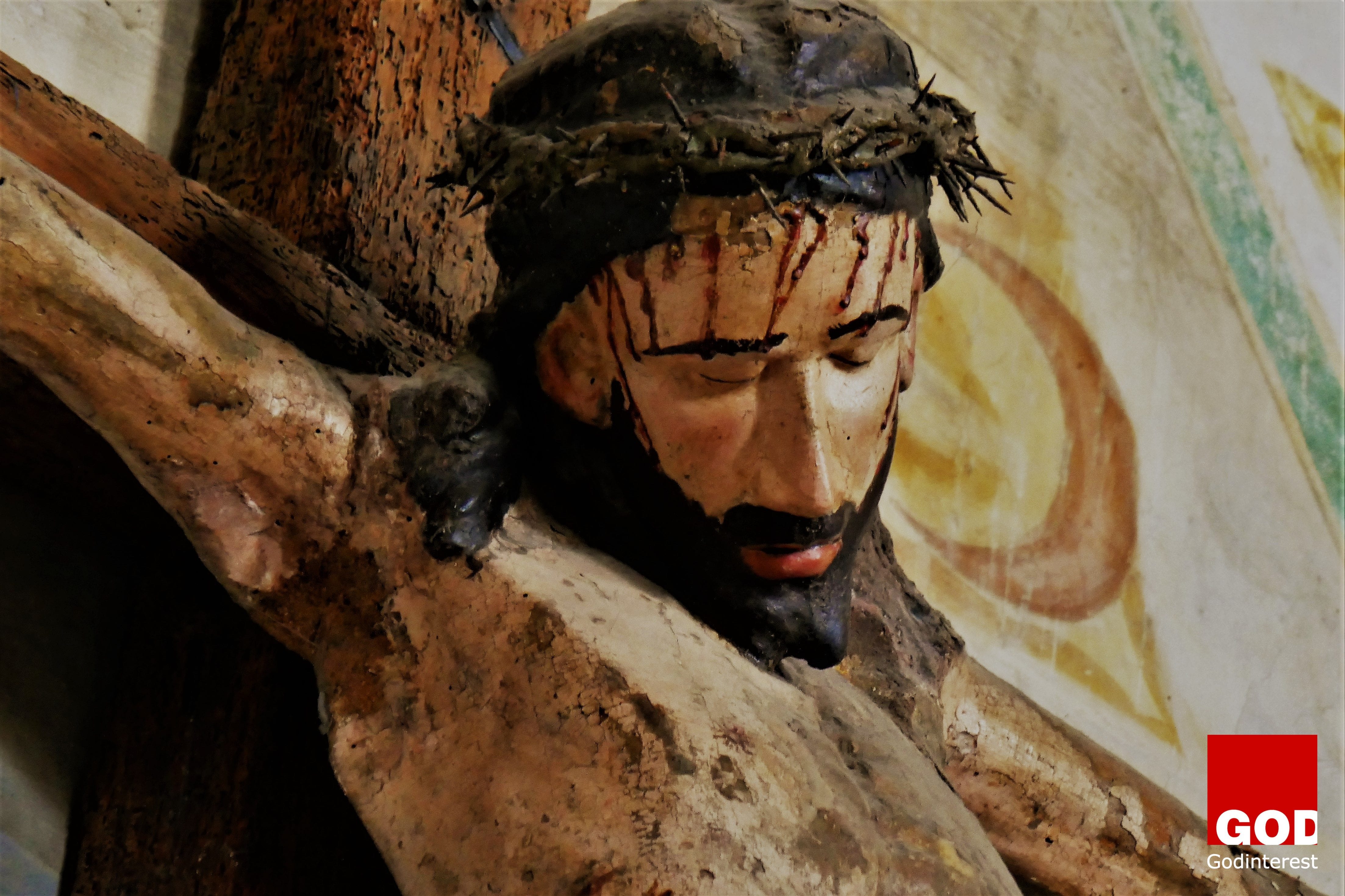
You Matter: God Knows You

You Matter: God Knows You

“It feels like God has forgotten about me,” cried the woman mourning her third miscarriage.

“Why won’t God answer my prayer for a job?” begged the man who got laid off six months ago, with a wife and four kids at home.

Can you relate to any of these hurting people?

Maybe you aren’t suffering from a natural disaster, miscarriage, or job loss. Maybe for you, it’s racial discrimination, sickness, loneliness, fear, church hurt, fill-in-the-blank. No matter what it is, we are guaranteed to face hardship in this life.  

This isn’t news. We all know that because of sin, life is going to be hard until Jesus returns to Earth. We know that trials will come sooner or later.  

But then, when they do come, something changes. The idea of hardship becomes a reality, and everything gets much, much harder. Knowing hardships happen is a lot different when you are actually walking through them. From the outside, we know that God is in control and has a plan for us. But in the midst of hardship, we tend to lose sight of this truth. We forget that God is in control, and will ultimately deliver us from every trial, whether in this age or the age to come. Instead, we can begin believing that God has forgotten us.

One of my favorite verses in the Old Testament is in Exodus 2. The people of Israel were enslaved by Egypt, and they were crying out to God for deliverance. Egypt was working them to the bone and treating them like dirt. All hope seemed lost as they cried out to God to save them from their bondage.  

Exodus 2:23-25 says, “During those many days the king of Egypt died, and the people of Israel groaned because of their slavery and cried out for help. Their cry for rescue from slavery came up to God. And God heard their groaning, and God remembered his covenant with Abraham, with Isaac, and with Jacob.  God saw the people of Israel—and God knew.

God sees you. He knows what you’re going through.  

In the midst of the hardest trial, this verse brings a breath of hope.  

Romans 8:27-37 says, “What then shall we say to these things? If God is for us, who can be against us? He who did not spare his own Son but gave him up for us all, how will he not also with him graciously give us all things? Who shall bring any charge against God’s elect? It is God who justifies. Who is to condemn? Christ Jesus is the one who died—more than that, who was raised—who is at the right hand of God, who indeed is interceding for us. Who shall separate us from the love of Christ? Shall tribulation, or distress, or persecution, or famine, or nakedness, or danger, or sword? As it is written, ‘For your sake we are being killed all the day long; we are regarded as sheep to be slaughtered.’ No, in all these things we are more than conquerors through him who loved us.”

In all these things – natural disasters, miscarriages, job losses,  racial discrimination, sickness, loneliness, fear, church hurt, fill-in-the-blanks – we are more than conquerors through Jesus.  


Because of Jesus, we can be confident in the truth that nothing will separate us from His love. If you are in the midst of hardship, linger over the words of Romans 8. Read them every morning, believing that God is in control, and is interceding for you.

God sees you. God knows you. Cling to Him.

What It Means to Be a Peacemaker

Blessed Are the Peacemakers

Jesus says “Happy are the peacemakers, for they shall be called sons of God.”

The commendation of peacemakers  – It is one thing to keep the peace and it is quite another to make peace. In the one case it already exists, in the other, we are calling it into existence since it is lacking. Jesus calls us to be peacemakers. That is a huge challenge. Jesus gives us the power! We are to seek peace. We are to pursue peace. We are not to let up until we achieve it. Jesus challenges us to be tenacious.

How is peace made? Where does it come from? Consider this from Paul in Colossians (1:20).  “Through Him to reconcile all things to Himself, having made peace through the blood of His cross; through Him, I say, whether things on earth or things in heaven.”

Peace is reconciliation with God. Without Jesus, we are enemies of God. James (4:4) warns us:  “Therefore whoever wishes to be a friend of the world makes himself an enemy of God.”  Through the blood of Jesus, we achieve peace. We make peace by doing the hard work of helping others become followers of Jesus.

This is at odds with the idea keeping the peace. When we are a peacemaker, we will be at odds with people. Many will hate us. Some will try to kill us and may succeed. This is huge in the upside down and radical world Jesus lays out in His Manifesto (Matthew 5 – 7)

Am I ready to be called a “son of God”? If I am a peacemaker, that is the promise of Jesus as to who I am. So there we go!

Matthew 5:9 (NASB) — 9  “Blessed are the peacemakers, for they shall be called sons of God.

Proverbs 12:20 (NASB) — 20  Deceit is in the heart of those who devise evil, But counselors of peace have joy.

Romans 14:19 (NASB) — 19  So then we pursue the things which make for peace and the building up of one another.

The importance of pursuing peace  – I can’t make peace if I don’t have peace myself. That is the first task, find peace in Jesus. Then, I can make peace by proclaiming His word and carrying on with His deeds. Jesus calls me to be a peacemaker. It is not optional. This isn’t about picking off one or two things off the menu.

Ecclesiastes 10:4 (NASB) — 4  If the ruler’s temper rises against you, do not abandon your position because composure allays great offenses.

Romans 12:18 (NASB) — 18  If possible, so far as it depends on you, be at peace with all men.

Titus 1:6 (NASB) — 6  namely, if any man is above reproach, the husband of one wife, having children who believe, not accused of dissipation or rebellion.

Hebrews 12:14 (NASB) — 14  Pursue peace with all men, and the sanctification without which no one will see the Lord.

James 3:17 (NASB) — 17  But the wisdom from above is first pure, then peaceable, gentle, reasonable, full of mercy and good fruits, unwavering, without hypocrisy.

Examples of peacemakers  – Who can we look to show us the way?

John 14:27 (NASB)  Peace I leave with you; My peace I give to you; not as the world gives do I give to you. Do not let your heart be troubled, nor let it be fearful.  ~ Jesus

Genesis 13:8–9 (NASB) — 8  So Abram said to Lot, “Please let there be no strife between you and me, nor between my herdsmen and your herdsmen, for we are brothers.  9  “Is not the whole land before you? Please separate from me; if to the left, then I will go to the right; or if to the right, then I will go to the left.”

The sequence of thought from the purity of heart  in the previous prescription for happiness (aka beatitude),  to peacemaking, seems very natural.  One of the most frequent causes of conflict is the secret planning of something illicit or detrimental to someone, while openness and sincerity are essential to all true reconciliation. The purity of heart leads directly to the ability to be a peacemaker.

Every follower of Jesus, according to this happiness prescription, is meant to be a peacemaker both in the community and in the church.True, Jesus was to say later that he had ‘not come to bring peace, but a sword’, for he had come ‘to set a man against his father, and a daughter against her mother, and a daughter-in-law against her mother-in-law’, so that a man’s enemies would be ‘those of his own household’. What he meant by this was that conflict would be the inevitable result of his coming, even in one’s own family, and that, if we are to be worthy of him, we must love him best and put him first, above even our nearest and dearest relatives. It is clear beyond question throughout the teaching of Jesus and his apostles that we should never ourselves seek conflict or be responsible for it. On the contrary, we are called to peace, we are active to ‘pursue’ peace, we are to ‘strive for peace with all men’, and so far as it depends on us, we are to ‘live peaceably with all’.

Now peacemaking is a big goal given to us by Jesus.  For peace means reconciliation, and God is the author of peace and of reconciliation. Indeed, the very same verb which is used in this happiness prescription is applied by the apostle Paul to what God has done through Christ. Through Christ God was pleased ‘to reconcile to himself all things, ”¦ making peace by the blood of his cross’. And Christ’s purpose was to ‘create in himself one new man in place of the two (i.e. Jew and Gentile), so making peace’. It is hardly surprising that the benefit which attaches to peacemakers is that ‘they shall be called sons of God’. For they are seeking to do what their Father has done, loving people with his love, as Jesus is soon to make explicit. It is the devil who is a troublemaker; it is God who loves reconciliation and who now through his children, as formerly through his only begotten Son, is bent on making peace.

The words ‘peace’ and ‘appeasement’ are not synonyms.  For the peace of God is not peace at any price. He made peace with us at immense cost, even at the price of the life-blood of his only Son. We too—though in our lesser ways—will find peacemaking a costly enterprise. Dietrich Bonhoeffer has made us familiar with the concept of ‘cheap grace’; there is such a thing as ‘cheap peace’ also.

To proclaim ‘Peace, peace,’ when there is no peace, is the work of the false prophet, not the witness of a follower of Jesus.  Many examples could be given of peace through pain. When we are ourselves involved in a quarrel, there will be either the pain of apologizing to the person we have injured or the pain of rebuking the person who has injured us. Sometimes there is the nagging pain of having to refuse to forgive the guilty party until he repents. Of course, a cheap peace can be bought by cheap forgiveness. But true peace and true forgiveness are costly treasures.

God forgives us only when we repent.  Jesus told us to do the same: ‘If your brother sins, rebuke him, and if he repents, forgive him.’ How can we forgive an injury when it is neither admitted nor regretted?

Or again, we may not be personally involved in a dispute, but may find ourselves  struggling to reconcile to each other two people or groups who are estranged  and at variance with each other. In this case, there will be the pain of listening, of ridding ourselves of prejudice, of striving sympathetically to understand both the opposing points of view, and of risking misunderstanding, ingratitude or failure.

Other examples of peacemaking are the work of reunion and the work of evangelism,  that is, seeking, on the one hand, to unite churches and on the other to bring sinners to the Messiah. In both these, true reconciliation can be degraded into cheap peace. The visible unity of the church is a proper quest of a follower of Jesus, but only if unity is not sought at the expense of the goals Jesus has in mind for us.

Jesus prayed for the oneness of his people.  He also prayed that they might be kept from evil and in truth. We have  no mandate  from the Messiah to seek unity without purity, purity of both belief and conduct. If there is such a thing as ‘cheap reunion’, there is ‘cheap evangelism’ also, namely the proclamation of the good news without the cost of discipleship, the demand for faith without repentance. These are forbidden shortcuts. They turn the evangelist into a fraud. They cheapen the good news of Jesus and damage the cause of the Messiah.

Harvard Christian club banned for Following the Holy Bible

Harvard Christian club banned for Following the Holy Bible

The club’s transgression? Harvard University has reprimanded a student Christian club for one year because its members pressured a female student leader to resign in September 2017 following her decision to date a woman.”, as reported by the Harvard Crimson.

Harvard College Faith and Action (HCFA) a thriving Christian student group was birthed in 2008 and is resourced by the Christian Union. Starting as a small group of eight freshmen studying the Bible together and then gained recognition from the College as an official student organization a year later.

The HCFA group reportedly has over 200 regular members attending Bible Courses and other weekly activities as of today.

The leaders of the HCFA Christian club said that they didn’t believe they violated any school policy, as they are a faith group based on Christian principals.

A college spokesman confirmed in an e-mail that the Harvard Faith and Action group has been placed on a one-year “academic probation.” The university has also said that if the club re-registers as a student organization next spring it will have to show that it is in compliance with the university’s “nondiscrimination principals.” Liberal hypocrisy one might add?

According to the Harvard Crimson, the action of asking the former leader to step down after they learned she was dating another woman violated guidelines in the Student Handbook, which states that student groups cannot discriminate on the basis of sexual orientation.

Aaron Goldman, Harvard spokesman said the Office of Student Life was alerted to the group’s actions in December 2017 and found it had conducted itself in a manner “grossly inconsistent” with the Student Handbook, he wrote in an e-mail.

“To be clear: Harvard is disciplining a Christian student group for the group’s expectation that its student leadership follow basic Christian ethical teaching on sexuality in accordance with Christianity’s 2,000-year-old doctrine on such matters.”

A statement from HCFA reads:

“We are an autonomous student group, and we do not discriminate on the basis of sexual orientation,” Molly Richmond, a co-president of the group, wrote in an e-mail Thursday afternoon. Richmond did not respond to questions about whether the group had asked the woman to step down and why.

Richmond said the club has operated at Harvard for more than 10 years and its policies and practices have remained unchanged.

“The college seems to believe despite our repeated assurances to the contrary that HCFA is not acting autonomously and that our leadership standards were applied unfairly,” she wrote.

What to make of this? Well, a lot.

The question is whether evangelicals will support this HCFA and remain true to the teachings of Scripture and the unbroken teaching of the Christian church for over two thousand years on the morality of same-sex acts and the institution of marriage.

Society is pressing this question upon us—voices that are calling for a radical revision of the church’s understanding of the Bible, sexual morality, and the meaning of marriage.  

So now Harvard has resulted to disciplining a Christian student group—and not some radical fringe group, but the largest Christian group on campus—for the group’s expectation that its student leadership follows Christian ethical teachings on sexuality.  So much for diversity?

For almost 2,000 years Christianity has spoken with one voice about homosexual behavior, calling it a sin. At the same time, the Church taught God’s design for sexuality — that marriage is the life-long, exclusive union of a husband and wife and the only place for sexual activity.

Harvard is a special case on this teaching as the school was founded explicitly on Protestant, even Puritan, faith and is now penalizing a group for holding to religious convictions that would have been identical to its founders’ views.

Unfortunately, according to other news sources, it seems as though anti-Christian discrimination is now the only form of bigotry acceptable at the modern university today.

32 Prayer Quotes – Be Encouraged and Inspired!

32 Prayer Quotes - Be Encouraged and Inspired!

To be a Christian without prayer is no more possible than to be alive without breathing as  prayer is the forerunner of mercy and  an essential element in our relationship with the Lord.

Like a good parent, God is waiting, ready, and willing to listen to our worries, concerns, and needs.

God shapes the world by prayer and the more praying there is in the world the better the world will be, the mightier the forces against evil.”

The following verses will encourage your daily walk with Christ and help you experience the power of prayer!

  1. “She  became a warrior far superior to any epic hero. She became a giant on her knees. With a sword in one hand she battled the enemies of death and disease, and with her other hand stretched toward heaven she kept beseeching God’s help and His mercy.” – Bishop T.D. Jakes“To pray rightly, you must make God your hope, stay, and all.” — John Bunyan
  2. “The function of prayer is not to influence God, but rather to change the nature of the one who prays.” — Soren Kierkegaard
  3. “True prayer is the trading of the heart with God.” — Unknown
  4. “She  became a warrior far superior to any epic hero. She became a giant on her knees. With a sword in one hand she battled the enemies of death and disease, and with her other hand stretched toward heaven she kept beseeching God’s help and His mercy.” — Bishop T.D. Jakes
  5. “No duty is more earnestly impressed upon us in Scripture than the duty of continual communion with Him.” — David McIntyre
  6. “The Christian life is not a constant high. I have my moments of deep discouragement. I have to go to God in prayer with tears in my eyes, and say, ‘O God, forgive me,’ or ‘Help me.” — Billy Graham
  7. “Do not pray for an easy life, pray for the strength to endure a difficult one” ’- Bruce Lee
  8. “To pray is to enter the treasure-house of God and to gather riches out of an inexhaustible “storehouse.” — Unknown
  9. “He who knows how to overcome with God in prayer has heaven and earth at his disposal.” — Unknown
  10. “The very act of prayer is a blessing.” — Unknown
  11. You are before the Lord; let your words be few, but let your heart be fervent.” — Unknown
  12. “The Master says that men of strong faith are men of much prayer.” — Andrew Murray
  13. “Prayer is the forerunner of mercy.” — Charles Spurgeon
  14. Prayer is the best response to hatred.” — Unknown
  15. It is well said that neglected prayer is the birth-place of all evil.” — Unknown
  16. No man can progress in grace if he forsakes prayer.” — Unknown
  17. A mighty piece of weaponry in the battle of prayer is God’s promise.” — Unknown
  18. “Sometimes when we do not receive comfort in our prayers, when we are broken and cast down, that is when we are really wrestling and prevailing in prayer..” — Unknown
  19. “We know not what prayer cannot do!.” — Unknown
  20. “All our problems are theological ones, William Temple said. All of them have to do with our relationship to God and his to us, and this is precisely why it makes sense to come to God with them.” — Elizabeth Elliot
  21. “God has not changed; and His ear is just as quick to hear the voice of real prayer, and His hand is just as long and strong to save; as it ever was.” — R.A. Torrey
  22. “Our prayers may be awkward. Our attempts may be feeble. But since the power of prayer is in the one who hears it and not in the one who says it, our prayers do make a difference.” — Max Lucado
  23. “There are parts of our calling, works of the Holy Spirit, and defeats of the darkness that will come no other way than through furious, fervent, faith-filled, unceasing prayer.” — Beth Moore
  24. True prayer is neither a mere mental exercise nor a vocal performance. It is far deeper than that – it is spiritual transaction with the Creator of Heaven and Earth.” — Charles Spurgeon
  25. “Let no one profess to trust in God, and yet lay up for future wants, otherwise the Lord will first send him to the hoard he has amassed, before He can answer the prayer for more.” — George Muller
  26. “I know that the Lord is always on the side of the right; but it is my constant anxiety and prayer that I and this nation may be on the Lord’s side.” — Abraham Lincoln
  27. “To get nations back on their feet, we must first get down on our knees.” — Billy Graham
  28. “Rather than set aside daily time for prayer, I pray constantly and spontaneously about everything I encounter on a daily basis. When someone shares something with me, I’ll often simply say, ‘let’s pray about this right now.” — Thomas Kinkade
  29. “Any concern too small to be turned into a prayer is too small to be made into a burden.” — Corrie Ten Boom
  30. “The prayer offered to God in the morning during your quiet time is the key that unlocks the door of the day. Any athlete knows and understands that it is the start that ensures a good finish.” — Adrian Rogers
  31. “God speaks in the silence of the heart. Listening is the beginning of prayer.” — Mother Teresa
  32. “Prayer makes a godly man, and puts within him the mind of Christ, the mind of humility, of self-surrender, of service, of pity, and of prayer. If we really pray, we will become more like God, or else we will quit praying.” — E.M. Bounds


Are You an Oddball in Loneliness?

Isolation from the Church Is Dangerous


Beware of isolation; beware of the idea that you have to develop a holy life alone. It is impossible to develop a holy life alone; you will develop into an oddity and a peculiarism, into something utterly unlike what God wants you to be. The only way to develop spiritually is to go into the society of God’s own children, and you will soon find how God alters your set. God does not contradict our social instincts; He alters them.(from Biblical Psychology, 189 L Oswald Chambers)

I had to admit to myself that this had become a bit too true of me.  I, in my desire to protect myself from hurt, had become accustomed to isolation, and surely had become a bit of an oddity, and a peculiarism.  God’s word is very clear on how holiness is developed. Oswald Chambers is being completely Biblical here. It is impossible to develop holiness alone. God speaks of it in 1 John 4:

In this is love, not that we loved God, but that He loved us and sent His Son to be the propitiation for our sins. Beloved, if God so loved us, we also ought to love one another. No one has seen God at any time; if we love one another, God abides in us, and His love is perfected in us. By this we know that we abide in Him and He in us, because He has given us of His Spirit. We have seen and testify that the Father has sent the Son to be the Savior of the world.

If we love one another,

  1. God abides in us,
  2. His love is perfected in us.
  3. By this, we know that we abide in Him and He in us because He has given us of His Spirit.

I need you, dear Sister or brother in Christ, in order to grow in love.  You need me, too.  God’s love is perfected in us as we learn to love each other despite failings, faults, and screw-ups.  Forgiveness should be a well-traveled road as a Believer in Jesus.  It is the only road to Calvary we will ever take.  Jesus calls us to the Garden of Gethsemane, as we learn to die to ourselves, but the Road to Calvary was His alone; and having walked it, He calls us to a new commandment: Love one another.  As God abides in us, His love is perfected in us, we have the assurance that we are His and we sense the power and presence of His Spirit, all through loving one another. O, the powerful ways of God, so transforming, so freeing, so right.

What example are you setting?

What Does the Bible Say About Friendship?

“Dead flies cause the ointment of the apothecary to send forth a stinking savour; so doth a little folly him that is in reputation for wisdom and honour.” Ecclesiastes 10:1

Just a little food for thought, because I am so tired of reading comments on social posts that attack the Christianity of others for telling the truth of God. I live in the south and there is a very common saying here, when someone gets mad at a Christian, after hearing the entire harrowing story of what has been done, you can almost guarantee the next words you will hear is, “And if THEY are going to heaven, I don’t have anything to worry about” if its someone I know, I usually like to add “Well, at least they are trying” and usually the one bashing the beliefs of another is not even saved.

Like it or not, fair or not, we are held to a higher standard. And right now the enemy is having a field day twisting those standards.

Maybe this is what opened the door for the onslaught of false and downright blasphemous practices of today. When the true Gospel is often met with jeers of intolerant, bigot, and anyone who warns of societal wrong is a target for their truly venomous hatred.

I read an article recently, written by a man a household name in the evangelical world, the article was true, based on the word of God and of course came with the warnings that no one in our present world wants to hear, including many in the “church” world. Of course, in the comments was a scathing rebuttal which included “that’s really Christian of him” and that unfortunately is now the world’s answer to the Gospel.

If we preach, if we write, if we witness, even in some of our personal lives everything we say is judged, everything we do is judged, and it is judged by an unsaved world who wants to take certain scriptures completely out of context and attempt to use God’s own word against his servants.

Proverbs 9:6-8 advises us this: “Forsake the foolish, and live; and go in the way of understanding. He that reproveth a scorner getteth to himself shame; and he that rebuketh a wicked man getteth himself a blot. Reprove not a scorner, lest he hates thee: rebuke a wise man and he will love thee.”

There is no changing their opinions, only God can do that.It can be quite the temptation not to reply, but we are not to argue the Gospel.

2 Timothy 2:16: “But shun profane and vain babblings (worthless talk): for they will increase unto more ungodliness.”

So it is up to us to step up to a higher level and check ourselves daily and even in hard situations to be certain that we are the reflections of God that he desires us to be.

Too often we become slack and even if having an upright reputation those decaying, dead things are allowed to enter into our lives it will destroy the work that God would do through us.

1 Thessalonians 5:22: “Abstain from all appearance of evil.”  

And when you also consider verses such as Song of Solomon 1: 3: “Because of the savour (fragrance) of thy good ointments thy name is as an ointment poured forth…..”

Because of His beautiful Holy name and the mention of that name alone brings the sweetest healing and sweetest fragrance of all that He is and we bear His name.

Even if something may seem harmless, ask if that action or those words would reflect honorably toward God. An off-color joke or inappropriate remark can detract from our witness to another person and often those who feel offended are rightfully so, but it has become so out of control that all that bear the name of Christ are open to that same criticism.

Most of us have those we look up too and especially new converts that view elders as a source of encouragement and guidance and when one who is, as our scripture states, known for wisdom gives over to their flesh, in any way, because the verse also states ” a little folly” they bring reproach and cheapen and nullify the true Gospel. The new covert is left feeling empty, betrayed, and absolutely disillusioned.

Again anyone can stumble, anyone can fall, but it is up to us to stay on guard, guard against ourselves, our flesh, and when we do we must be quick to admit that and repent.

So keep your testimony and the sweetest of the life God has given you a “no-fly zone” and keep it clean.

Romans 14:16: “Let not your good be evil spoken of.” The devil is always going to send someone to tear us down, and we don’t need to keep giving them the tools for the job.

God’s Reckless Love

This post is inspired by Cory Asbury’s song entitled “Reckless Love”.

When you think of the word “reckless”, what comes to mind? I honestly think of reckless driving. Driving at high speeds while weaving in and out of traffic. Something like that. So how can we possibly use this word to describe God’s love? Cory Asbury does just that in his song, “Reckless Love”.

[The following is a video of me covering the song at an event. Enjoy!]

[videopress qpZ7h2VG]

A LOOK AT RECKLESS LOVE  

The Chorus

Let me first share with you the lyrics from the chorus:

Oh, the overwhelming, never-ending, reckless love of God. Oh, it chases me down, fights ’til I’m found, leaves the ninety-nine. I couldn’t earn it, and I don’t deserve it, still, You give Yourself away. Oh, the overwhelming, never-ending, reckless love of God.

Some have argued that the use of “reckless” was a poor word choice and shouldn’t be used to describe God’s love. But I can see exactly where Cory is coming from. God’s love is reckless in its selflessness. It is never-ending. No matter how many times his children may hurt Him, He is still in constant pursuit of each and every one of us. The reference to Matthew 18:12-13 is extremely powerful. God leaves the ninety-nine sheep to pursue the ones who have strayed. That reckless love is an amazing love, an unconditional love.

The Bridge

The bridge of the song continues to describe the depth of God’s love:

There’s no shadow You won’t light up, mountain You won’t climb up, coming after me. There’s no wall You won’t kick down, lie You won’t tear down, coming after me.

This part of the song stands out to me the most. We all have had moments where we have strayed from God and his plans. Yet, no matter how many times we turn away, God is always right there with open arms, waiting to receive us. The imagery of the bridge is what amazes me. It describes a fierce and intense kind of love–Tearing through mountains, breaking down barriers, and exposing the “monsters” in our lives. That’s the reckless kind of love that God has. We just have to acknowledge Him, turn back towards God and run into those open arms.

The Message

There is so much to say about this song and the message Cory Asbury is sharing. Along with everything discussed previously, there is also the message of the Prodigal Son (Luke 15:11-32). God won’t wait for us to reach Him. When He see’s that we have turned from our ways, He will also come running towards us. But keep in mind the work that He is doing in the background even when we aren’t in tune with Him–Paving his way past through the enemy’s tactics just to get to us.

God’s love is like no other. He fights for us each and every step of the way. This is the love He has continued to show us. Unconditional. Overwhelming. Never-ending. Reckless. His love is our standard, and as believers, we should be intentional in our pursuit to reach that standard.

Jesus and Easter

Jesus and Easter

Some of the sharpest, most bitter arguments the church has ever had have been about the meaning of the meal which Jesus shared with his friends the night before he died, and of the similar meals, his friends have shared ever since. In the sixteenth century, in particular, these arguments exploded in several directions as Christians accused one another of perverting or even undermining altogether the point and purpose of this meal.

That is tragic, of course, but the present passage indicates that we should not, after all, be surprised. The story of Jesus sharing the bread and the wine, in those four brief verses 26—29, is surrounded by the discussion of the betrayal that was about to happen (verses 14—16, 20—25) and the warning that all the disciples would abandon him, and that Peter, particularly, would deny him (verses 30—35). Perhaps it is always so.

Perhaps, whenever something truly and massively important is afoot, it becomes the place where attack is concentrated, where Jesus’ friends will be distracted by so many immediate muddles and concerns that they risk missing the glorious thing that stands quietly in the centre, the gleaming diamond in the middle of the rubbish-heap.

And diamond it is — with many facets, reflecting light all around. This meal, this Passover-with-a-difference, was the way Jesus chose to explain to his followers what his death was all about. They hadn’t understood what he’d said to them up to this point, but this meal, and their repeating of it thereafter, would soak it deep down into their imaginations. What you do, and particularly what you eat and drink, changes the way you think and feel. Jesus wanted them, and us, to know at a level much deeper than mere theory that his death was the true Passover, the time when God acted to rescue his people from slavery once and for all, and that we are not merely spectators but participants and beneficiaries. When we come to the table, as Paul said to the Corinthians, we truly share in his body and blood (1 Corinthians 10.16). We are shaped and formed, together and individually, as Passover-people, as rescued-from-slavery people, as dying- with-Jesus people.

For a community to be formed and shaped in that way is perhaps the most powerful thing that can happen to a group of people. Again, that’s why it’s so easy to distort it, to allow squabbles and muddles and even betrayals and denials to creep in and spoil it. Sometimes the church has made its sharing of this meal into such a wonderful work of art that everyone is thinking about how clever the art is rather than about how awesome Jesus is. Other Christians have over-reacted to this, and come to the meal, when they have to, almost casually or flippantly, like someone whisking through an art gallery with a cheerful comment about the pretty paintings. We all need, constantly, to find our way back into the heart and meaning of this meal. As Jesus makes clear in verse 29, this meal is the prelude to the coming of the kingdom — which must mean that Jesus himself, and Matthew in shaping his gospel the way he has, saw his death, interpreted in this Passover-fashion, as the final act of kingdom-bringing.

Certainly, that is the implication of 28.18. Jesus’ death is the final overthrow of the powers of darkness, which is why his resurrection then establishes him as the one who has all authority in heaven and on earth. However puzzled we may be (if all this is anywhere near the truth, we should hardly expect to understand such a huge and mysterious thing straight off), we are called to share the meal, to stay focused on Jesus as the rescuer, the kingdom-bringer, and so to encourage one another to be kingdom-people. To be Jesus-people.

TODAY
Help us, gracious Lord, to come to your table in gratitude and love, that we may be formed into your people and be strengthened in your service.

Should I Do Yoga if I am a Christian?

Recently I’ve been on a spiritual journey that includes deep prayer, meditation, and mindfulness to help me to connect with God. At the same time, I’ve also been on the hunt for some low-impact stretching that could potentially help with chronic pain in a natural way.

Meditation and stretching. Put those two together and what do you get?

Yoga.

So, I’ve said I need to stretch. And I find that meditation brings me closer to God. These all naturally come together in the form of yoga. But, as a Christian, should I do yoga? Am I allowed? Will Jesus love me less?

Well, first, let’s see”¦what does the Bible say about the word “yoga”? Nothing. Zero. There’s no record of that word being used.

So now what do I do? Since the Bible doesn’t talk about yoga specifically, I have to use the brains God gave me to dig a bit deeper. Then I can determine how best to deal with this current cultural trend.

Let’s start with a few of the basics:

Yoga began as a spiritual disciple in Hindu which includes breath control, meditation, and static postures of the body. Some people who practice yoga are active Hindus or Buddhists. Many are not.
In the western world, yoga is a broad term that is often descriptive of people engaging in the physical body postures that encourage strength and stamina. Sometimes this is combined with meditation for mental strength, but not exclusively. Some yoga classes used sacred words such as “Om”, “Namaste”, and certain chants that hint to Buddhism and Hinduism. Other classes make no reference to the spiritual world at all and are simply a form of physical exercise. Yoga potures have Sanskrit names that have spiritual meanings. Many times these are replaced with English names that simply describe the form the body is taking. (For instance, “lotus” has become “criss-cross applesauce”.)

The word “yoga” in Sanskrit means “yoke” or “union with God”. God tells me to not worship another god, and I must obey.

So I know that yoga started as an ancient spiritual practice of another religion which should lead me to move forward with caution. But I also know that Jesus came to redeem all things.

Is it possible to engage in a moderated form of yoga that feeds our Christian souls, or should we avoid it altogether? Can we be aware of the potential pitfalls and dangers of the spiritual side of yoga and then practice it in a meaningful way with a Christian bent and attitude?

The famous American minister John Piper seems to think that we can’t. He says we should avoid yoga completely, citing it as antithetical to Christianity.

Don’t get me wrong, I think Piper has some good things to offer. But in this situation I tend to think that maybe he’s throwing the proverbial “baby out with the bathwater”.

Christians have often taken “secular” symbols or practices and re-stored them into something that is healthy and even God-glorifying. Take Christmas, for example. December 25, the day on which we now celebrate Jesus’ birth, was reclaimed from the pagans. That date was redeemed from a pagan holiday to a Christian celebration.

Jesus has come to redeem all things. Even pagan holidays. Possibly even stretching and meditation and breathing?

Over the ages, Christians have used wisdom and the discernment to choose what is right for them as individuals and as a Body of believers. To apply Jesus’ redemption to various non-Christian things.

“Everything is permissible but not everything is beneficial.” 1 Corinthians 10:23

So I need to decide if yoga could be beneficial (or detrimental) to me. In my case, I truly believe God has given me the wisdom and discernment to be able to stretch and strengthen my body without accidentally worshipping a false god. I even believe that I can meditate and breathe while I simultaneously reflect and contemplate how incredible God is. All without slipping into the devil’s snare.

But I am aware that this may not be the case for all people.

Personally, think that I can apply the idea of a “yoke” or “union with God” in yoga to my relationship with Christ. But that doesn’t mean I’ll just sign up for any yoga class that is offered. I need to be wise and first ask questions about how spiritual a class is before taking it. For my own purposes, I tend to learn at home with videos, so there’s not much of a risk of me getting caught in an awkward situation. If something gets a little weird, I can just turn it off.

Holy Yoga is a practice that is gaining traction, offering the grounding of the Gospel while reframing the positive aspects of yoga in a Christian way.

Holy Yoga embraces the essential elements of yoga: breath work, meditation and physical postures. In all of these elements, Christ is the focus of our intention and worship.”

So as I‘m making a decision about yoga (or anything in my life!), I need to ask if it creates a risk of becoming a detriment to my walk with Jesus. If so, then I absolutely shouldn’t do it! But if yoga can be practiced in a way that is healthy to my body and mind, while drawing me closer to Christ with mindfulness and meditation, then is it possible that even John Piper can’t argue with that?

Does Prayer Really Make a Difference?

Does Prayer Really Make a Difference?

If you and I were having coffee together, and I asked you, “Hey, how’s your prayer life?”, how would you respond?

I know for most followers of Jesus, myself included, prayer is one of those things that we  know  we should do, but struggle making it a regular practice throughout our daily life.

Like any relationship, communication with Jesus is vital if we actually want to grow closer to Him. So we commit to pray. We sit down in the morning with our coffee and Bible, and start praying. It feels awkward, and we start to stumble through different things to pray for. We look at the clock after we’ve prayed for everything we can think of, and three minutes have passed. We get discouraged, pull out our phone, and give in to the noise of social media rather than the calming presence of our Creator.

I don’t know if you can relate to this scenario, but it strikes close to home for me. We want to pray. But it feels awkward, boring, and we quickly run out of things to say. And then we wonder,  does my praying even make a difference?

Theologian Dallas Willard wrote, “The idea that everything would happen exactly as it does regardless of whether we pray or not is a specter that haunts the minds of many who sincerely profess belief in God. It makes prayer psychologically impossible, replacing it with dead ritual at best.”  If God is good, all knowing, and all powerful, why do we need to pray anyway? Since God is ultimately  in control, everything is going to happen the way it’s going to happen…right?

While this is a common assumption for a lot of us, it is far from what Scripture says about prayer. One story in Exodus completely blows this assumption to smithereens. Let’s take a look at it.

The story is in Exodus 32, when God was talking with Moses. Verses 7-14 details their conversation. It says,  “The Lord told Moses, ‘Quick! Go down the mountain! Your people whom you brought from the land of Egypt have corrupted themselves. How quickly they have turned away from the way I commanded them to live! They have melted down gold and made a calf, and they have bowed down and sacrificed to it. They are saying, ‘These are your gods, O Israel, who brought you out of the land of Egypt.’’’¨’¨Then the Lord said, ‘I have seen how stubborn and rebellious these people are. Now leave me alone so my fierce anger can blaze against them, and I will destroy them. Then I will make you, Moses, into a great nation.’’¨’¨But Moses tried to pacify the Lord his God. ‘O Lord!’ he said. ‘Why are you so angry with your own people whom you brought from the land of Egypt with such great power and such a strong hand? Why let the Egyptians say, ‘Their God rescued them with the evil intention of slaughtering them in the mountains and wiping them from the face of the earth’? Turn away from your fierce anger. Change your mind about this terrible disaster you have threatened against your people! Remember your servants Abraham, Isaac, and Jacob. You bound yourself with an oath to them, saying, ‘I will make your descendants as numerous as the stars of heaven. And I will give them all of this land that I have promised to your descendants, and they will possess it forever.’’  So the Lord changed his mind about the terrible disaster he had threatened to bring on his people.”

Don’t miss what just happened…God was going to do one thing, Moses pleaded with Him to do something else, so God changed His mind.  Do you realize that your prayers have the same power today that Moses’ prayer had?

Mark 11:24 says,  “Therefore I tell you, whatever you ask in prayer, believe that you have received it, and it will be yours.”

God wants an active relationship with you, which means back and fourth conversation. We are to be active participants in this relationship, rather than mere bystanders just waiting to see what God will do. That means that we must pray, expecting God to listen and respond to our prayer.

Let me clarify, I’m not advocating for a health-and-wealth Gospel. Some teachers declare that if you just have enough faith and name what you want, it will be yours. This is not what I’m saying. Health-and-wealth teaching is dangerous and far from biblical truth.

What I am saying is, let’s raise our view of prayer. God wants to engage in conversation with us, and will act on our prayers. He is a Good Father who listens to His children.

1 John 5:14-15 says,  “And this is the confidence that we have toward him, that if we ask anything according to his will he hears us. And if we know that he hears us in whatever we ask, we know that we have the requests that we have asked of him.”

Our Unchangeable God in an Ever-changing World

Our Unchangeable God in an Ever-changing World

That God is unchangeable is foundational to the character of God. Because He is unchangeable, all His attributes are intact throughout all time. He will never lose any part of His nature. Each trait is present in every circumstance. For instance, in the midst of man’s great wickedness, God exercises justice and righteousness because God is holy. As He executes justice and righteousness, God remains love. “Remains” is the proper word to use here because God is love. He is not just loving, He is love. He is the very essence of love.

God is complete.

Exodus 3:14 says, “God said to Moses, “I AM WHO I AM”; and He said, “Thus you shall say to the sons of Israel, ‘I AM has sent me to you.'” Hebrews 13:8 says, “Jesus Christ is the same yesterday and today and forever.”

These verses tell us that God is complete. He doesn’t need further growth or improvement. He doesn’t need more expertise. He has already attained. He has already reached the finality of who He is. He is all-perfect and all-mature. He is capable of being God.

God is consistent.

In Malachi 3:6 God declares, “For I am the Lord, I change not; therefore ye sons of Jacob are not consumed.” In Lamentations 3: 22,23 Scriptures say, “Because of the Lord’s great love we are not consumed, for his compassions never fail. They are new every morning; great is your faithfulness.”

These verses tell us that God is never swayed into being somebody else. He remains who He is regardless of how we are before Him. He acts and behaves according to His nature and never in accordance with how favorable or unfavorable we look before Him. He gives blessing upon blessing not because man is good but because HE always is.

God is reliable.

Numbers 23:19 says, “God is not human, that he should lie, not a human being, that he should change his mind. Does he speak and then not act? Does he promise and not fulfill?”

This verse tells us that God doesn’t speak thoughtlessly or on a whim. He is never impulsive. Backed by an eternity of experience and knowledge, all He speaks is certain and trustworthy. I can count on Him to make good on all that He says.

A popular quote says, “Change is the only constant thing in this world.” However, there’s an equally popular quote that says, “Some things never change.” These are conflicting statements, right? Because the only constant thing in this world is not a thing. It’s a person and it’s God.

Let’s look at Psalm 102 for a moment and see how it ends beautifully. It says these about our unchangeable God:

“In the beginning you laid the foundations of the earth,
and the heavens are the work of your hands.
They will perish, but you remain;
they will all wear out like a garment.
Like clothing you will change them and they will be discarded.
But you remain the same, and your years will never end.

God is constant. Best of all, He is our constant companion. He will never change and He will never leave.

Ever-Present Troubles, Ever-Present God

Ever-Present Troubles, Ever-Present God

“Omnipresence” is what theologians call the presence of God. He is everywhere at the same time, all the time. He has a universal, unbounded presence. There is never a place where He cannot be. There is no place and no person beyond His reach.

“God is ever at your side.”

I love the thought of God being everywhere. But what I love more is the thought that God is ever here. He is ever at my side. As God promised Joshua in Deut. 31:6, so does He promise us now that He goes before us. He will never leave us nor forsake us. Sin, stress, and sorrows may cause us to doubt or forget that promise. But, God will remind and assure us of His unfailing presence especially when we most need it.

“God is with you when you must face something alone.”

God is with me at all times and in all situations. Psalm 23 assures us that even when we face death, He will be there with us. We need not fear the experience. For the child of God, death is never an end. It is but a transition into an eternity with our Father in heaven.

“God is with you permanently.”

From King Saul’s life, we learn that the Spirit of God left when there was sin and disobedience. From Samson’s life, we learn that the Spirit of God left when there was self-will. God’s Spirit came and He went whenever there was godlessness. After the resurrection of Christ, this changed. Before he ascended back into heaven, Jesus left His disciples an assuring promise of His unfailing presence in the person of the Holy Spirit. In John 14:16, Jesus said, “And I will ask the Father, and he will give you another Helper, to be with you forever.” He promised power from on High and He promised that this Divine Enabler would be with us forever. Sadly, we grieve the Holy Spirit in our lives when we live in rebellion. But thankfully He stays with us, rebuking us of our sin and leading us back into the path of righteousness.

“God is forever close and accessible.”

In the Old Covenant, only the high priest had exclusive access to a special section within the tabernacle, the Holy of Holies, where God’s presence dwelt. At the death of Christ on the cross, the veil that secluded the Holy of Holies tore apart. With that was a divine message that Christ has removed the barrier of separation. With that was a declaration that Christ has bridged us to the Father. From that time, man can be redeemed and could go into the very presence of God.

This is probably one of the greatest privileges ever afforded to the child of God. No longer do we have to depend on another person to make requests and communications with God on our behalf. We can directly enjoy communion with God, speak our hearts out to Him, and thru the Spirit, hear His heart reach out to us.

Our God is everywhere and our God is ever here. May this encouraging thought empower us to live confident lives today.

Godinterest

Sharing the life changing Gospel message found in Jesus Christ

Skip to content ↓


As seen on