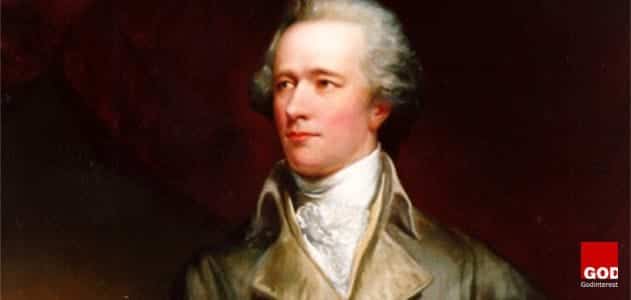
Is Britain a nation of slient Christians?

Is Britain a nation of slient Christians?

The idea of the UK as a Christian nation has been challenged in recent years. The latest survey says that more than half of the population has no faith and the share of the population who say they are  Christians has fallen to just 15 percent – the lowest ever recorded.

But does this show that Britain has finally turned the corner, and are no longer a Christian nation?

“More than two-thirds of the population said they were Christian. This has now fallen to 41 per cent.”

What we’re seeing is an acceleration in people who are not only not practicing their faith on a regular basis, but that do not even identify themselves as Christian anymore.

“On one level one could argue that Britain will remain a Christian nation until a movement comes along that redefines it in explicitly secular terms.”

But it remains the case that religion is no longer the main background against which individuals and the Government measure their morality. Instead, many people who are looking for something to believe in are instead placing their trust in the occult or New Age beliefs and the relative popularity of “spirituality”.    People also continue to look for meaning in alcohol, pornography, and recreational sex.

“The situation has been exacerbated by the comments of senior church figures such as the Archbishop of Canterbury, Justin Welby, who lamented earlier this year that “the British culture is becoming anti-Christian.”

Nick Baines also warned that a brand of “intolerant” liberalism circulates in the UK which is dismissive of the  Christian faith.  The Right Reverend Nick Baines, the Bishop of Leeds, said  “some secularists “have a problem” with religion being talked about.”

He made his comments after Theresa May said it is important people can talk freely about their faith following claims some Christians dare not speak about Christmas.

The result is that Britain’s Christianity is largely unexpressed
It seems that the Christians  – maybe about a half according to polls – feel vaguely Christian but don’t know how to express it.  

“In a strange way, Britain’s Christianity is largely unexpressed.”

Bishop Baines said: “Clearly there are some Christians who are concerned about whether they are free to talk about their faith in a respectful and appropriate way in the workplace.

“Equally, there are plenty of people who are not Christians who think that Christians shouldn’t, or think there is an issue around it. I call it religious illiteracy.

Sociologists will tell you that this makes no sense and that culture is what is expressed. But maybe religion, these days, is harder to express than other things amidst all the censorship and while it is clear Christianity is not reinventing the wheel: Christianity  is at-least fusing modern tastes with smart messaging that sits with both traditional Christian values and contemporary concerns about the world.

Bishop Baines said: “There are people who have been disciplined or threatened with discipline for talking about their faith even though they have been asked about it. Someone makes a complaint and says they have been inappropriate. This is absurd.”

He added: “There is, amongst some Christians – this isn’t universal – a sense of being a little picked on or beleaguered.

“I think if you claim to be open-minded and liberal, why are you so frightened of religious expression?”

“It is a Christian festival. Are they going to tell Muslims they have got to strip Islam out of Eid? It’s ridiculous”

“Liberalism can become very intolerant of anything that doesn’t fit its own parameters.”

We have already seen a number of cases in Britain when Christians have been disciplined or sacked at work or expelled from school for expressing their faith.

We are clearly at the beginning of a new era and know the Church will continue, whatever happens in accordance with biblical teachings.  As we Christians say, all things are possible through Jesus Christ who strengthens us.

Hamilton Opens in London to Rave Reviews

Hamilton, An American Musical, at the Richard Rodgers Theatre

Hamilton is no longer just an American sensation. Lin-Manuel Miranda’s smash hit Broadway Musical opened last week in London, at the Historical Victoria Palace Theatre.   The musical has been met with five-star reviews from the London media, crossing a cultural boundary with little resistance.

Manuel didn’t sense much difference from the audiences across the Atlantic.

“I was here for all of tech (rehearsals) and I was here for the first few previews, and the audience is exactly like New York,” he said.

Miranda believes that making the jump to London would make Alexander Hamilton smile. “Alexander Hamilton had so much admiration for Britain and Europe but never left US soil. So to have his story on the stage here in London, well – I think he would be very proud.”

The overwhelming response of London wasn’t a slam dunk.   Some wondered if a story about the Founding Fathers of America, fighting for their independence from Britain would resonate as deeply with London crowds.   But the London success points to the reality that this story resonates with audiences, even across national and cultural boundaries.

Matt Trueman writes in his Variety review, “Hamilton is going to be just fine here in London”¦Reviewing it feels like sizing up the Mona Lisa or Beethoven’s Fifth and, in truth, Hamilton lands on the London stage looking every inch the classic.”

He closes his review with the thought that “it is Hamilton’s story that stirs.”

Hamilton’s story does indeed stir something powerful in us, a point I make in my upcoming book, God, and Hamilton: Spiritual Themes From The Life of Alexander Hamilton & the Broadway Musical He Inspired.

One universal reason this musical stirs audiences so deeply is that Hamilton’s story is a deeply spiritual one.   His story intersects with our lives across a number of significant spiritual themes.

His story is a story of grace, as his entire life in America was made possible by a generous financial gift by someone who saw great potential in him.   His story is a story of shame, as he never quite escaped the stigma from being an illegitimate orphan.   His story is a story of forgiveness, as his wife Eliza wrestled through forgiving Alexander for betraying her in the worst possible way.   His story is a story of redemption, as the musical ends with Eliza singing about the orphanage she built out of love for her late husband.

This story stirs us because it is a spiritual story.   It stirs us because it is our story.   We too live our lives built on the foundation of grace.   We too struggle mightily with shame from our failures and shortcomings.   We too must give and receive forgiveness for all the mistakes we make in our lives.   Hopefully, our story is one of redemption, where God takes all the broken pieces of our lives and makes them beautiful.

The story Hamilton tells stirs audiences, no matter the culture, the nationality, the race.   It does so because it tells a deeply spiritual story, one that intersects with our lives, and has the power to transform our lives if we let it.

Even, apparently, across the great expanse of the Atlantic Ocean.

God and Hamilton

My  upcoming book: God and Hamilton is available June 2018 on Amazon.com, (www.godandhamilton.com).

Nine Months Before Christmas

Why have I entitled this article, “Nine Months Before Christmas”?   If you’re a mother, you would have no difficulty understanding what I mean.   Every year at this time, we celebrate the birth of the baby Jesus in a stable in Bethlehem.   But there is another amazing miracle that is often overlooked during this season.   If you believe that life begins at conception, as I do and as the Bible teaches, then the Lord Jesus Christ became a human being at the moment of His conception in the womb of Mary.   I personally think that this is an even more amazing miracle than His birth.   Since this event is often overlooked during the Christmas season, let’s take a look at the sequence of events and the miracle that occurred at His conception as recorded for us in Luke’s Gospel.

I.   THE SETTING (verses 26-27)

The story begins in Luke, chapter 1.   Verses 26 and 27 say, “Now in the sixth month, the angel Gabriel was sent to a city in Galilee called Nazareth, to a virgin who was engaged to a man named Joseph, of the descendants of David; and the virgin’s name was Mary.”  Luke states that it is the “sixth month”   He means the sixth month of Elizabeth’s pregnancy.   He’s marking time from the last appearance of the angel Gabriel, and the miracle of pregnancy that was promised to the aged priest, Zacharias and his wife Elizabeth.   They were going to be the parents of John the Baptist, the forerunner of the Messiah.

In verse 27 we are introduced to Mary, a virgin girl, probably in her early to mid-teen years, and she was engaged to a man named Joseph.   Among the Jews at that time, the marriage vows were said at the engagement (betrothal), and it required a divorce to end the relationship.   It was the custom for there to be an interval of usually a year before she could take up residence in her husband’s house and the physical union could be consummated.   It must have been near the end of that engagement period.   Mary and Joseph were both from Nazareth and so they were both very poor.   This town, and the Jews in it, were despised by the Jews in Judea because Nazareth was a small, poor, out-of-the-way town in the region of Galilee where there were more Gentiles than Jews.

II.   THE GREETING (verses 28-29)

Everything seems to be going according to plan for Mary and Joseph, and then something unexpected happens.   God sent the angel Gabriel on another mission. this time to Mary.   Gabriel’s name means “the strength of God”, and he is often seen delivering messages of kindness and blessing.

There seems to be a fascination with angels, especially at Christmas time.   Recent surveys have shown that anywhere between 55-70% of Americans believe in the existence of angels and their activity in our world today.   There have been several major motion pictures about angels, as well as movies having angels in them.   The classic film, “It’s A Wonderful Life” is shown every Christmas season, and the angel, Clarence (Henry Travers) shows George (James Stewart) what life would have been like if he had never been born.   If you have never seen this movie, please put it on your “must-see list” this year.   You will really enjoy it!

The Bible says that angels are “innumerable” (Psalm 68:17).   There are too many of them to count.   Yet only two angels are named in the Bible:   Gabriel and Michael.   It’s interesting to note also that both Zacharias and Mary recognized that it was an angel who was visiting them.   I’ve often wondered whether the faces of angels shone because of being in the presence of God and seeing Him face-to-face.   We will know some day!

Let’s see what the angel Gabriel has to say to Mary.   Luke 1:28 says,  “And coming in, he said to her, ‘Hail, favored one, the Lord is with you’.”  He’s not putting her on a pedestal above other women.   He is letting her know that God has given her a unique role to play in His plan of salvation.   It is an unmerited favor from God.   She didn’t earn the right, nor did she deserve it, but, as we shall see, she didn’t gloat over it but humbly accepted it.   Steven is also called “full of grace” in Acts 6:8.   In verse 29 we see Mary’s initial response to his greeting:   “But she was greatly troubled at this statement, and kept pondering what kind of greeting this might be.”  I can imagine that many thoughts and questions were going through her mind, such as “What an unusual greeting”.   “Why would he be saying that to me?”   “I’m supposed to return his greeting; what words should I say?”

III.   THE ANNOUNCEMENT (verses 30-33)

The angel Gabriel seems to understand her fears and concerns because he tells her:  “Do not be afraid”, calling her by name.   Then he declares to her the announcement that was given to him by God.

“And behold, you will conceive in your womb, and bear a son, and you shall name Him Jesus.   He will be great, and will be called the Son of the Most High; and the Lord God will give Him the throne of His father David; and He shall reign over the house of Jacob forever; and His kingdom will have no end.”  

After that description, I don’t think there was any doubt in Mary’s mind that this child he speaks of is going to be the Messiah.   The phrase,  the  “Son of the Most High” is a Messianic title, and His lineage and everlasting reign eliminate all other possible contenders. (Psalm 89:36-37; Isaiah 9:6-7)

As a Jewess, should Mary have known that the Messiah was going to come by virgin-birth?   Yes.   Was it her fault that she didn’t know it?   No.   This information given by the angel Gabriel should not have come as a surprise to the nation of Israel.. There are at least two passages of Scripture in the Old Testament that point to the virgin birth of the Messiah.   The first is Genesis 3:15.   After the serpent tempted Adam and Eve, and they sinned, God said to the serpent,  “And I will put enmity between you and the woman, and between your seed and her seed.   He shall bruise you on the head, and you shall bruise Him on the heal.”

A woman doesn’t have a seed.   She has eggs.   The man has the seed.   If this mother of the Messiah is going to have a seed apart from man, she will remain a virgin, right?   If the seed doesn’t come from man, then it has to come from God.   Isaiah 7:14 confirms this.  “Therefore the Lord Himself will give you a sign.   Behold  a virgin shall be with child and bear a son, and she shall call His name ‘Immanuel’.”  The Scribes and teachers of the Law ignored, overlooked, and failed to teach about the suffering Messiah because they were looking for the conquering Messiah.

IV.   THE QUESTION AND THE ANSWER (verses 34-37)

Mary’s response to the angel Gabriel’s announcement is not the same as that of her relative Zacharias.   Mary believed that God could do what the angel said.   She didn’t ask for a sign as proof that what he is saying is true.   She is just curious as to the “process” by which it would be done since she was a virgin.   So she asks the question:  “How can this be since I am a virgin?”  Just how is this all going to come about?   Obviously this was going to be no ordinary conception!

First, Gabriel says,  “the Holy Spirit will come upon you”.  He is answering her question with words she can understand – words from the Old Testament Scriptures.   His words reminded her of Old Testament stories she heard from her parents, and lessons she learned in the synagogue, about how the Spirit of God “came upon”  Joshua (Num. 27:18), Saul (I Sam. 10:10), David (I Sam. 16:12-18), Bezalel (Ex, 31:2-5, and others.   In each case the Spirit came upon them to empower them and enable them to accomplish the work that God called them to do.   This would have directed her thoughts to the power, the provision, and the faithfulness of God.   As she did this, her worries would begin to fade away.

Secondly, Gabriel says,  “The power of the Most High will overshadow you.”  The word translated “overshadow” means “to cover”.   Any Jew during that time would associate that word with the tabernacle in the wilderness during the forty years of wandering in the desert.   Exodus 40:34, 35, and 38 describe God’s  “overshadowing” of the tabernacle after it had been erected.  “Then the cloud covered the tent of meeting, and the glory of the Lord filled the tabernacle. . . . For throughout all their journeys, the cloud of the Lord was on the tabernacle by day and there was fire in it by night, in the sight of all the house of Israel.”

The cloud over the tabernacle was a symbol of God’s glory and His continual presence with His people.   To an Israelite, it was comforting to think that God was hovering over them like an eagle over its nest, with its wings outspread, keeping an eye on them and protecting them.   The cloud also depicted the holiness of God, and therefore His worthiness to be worshipped.   The angel Gabriel was telling Mary that her womb would be the tabernacle of the Son of God for nine months.   He was directing her thoughts toward the holiness of God and the continual presence of God over her (and in her).

V.   THE SECOND ANNOUNCEMENT (verses 36-37)

The angel Gabriel’s second announcement is one of joy and encouragement to Mary.   She learns that her relative Elizabeth is pregnant and in her sixth month of pregnancy.   Elizabeth was old enough to be Mary’s grandmother or even great-grandmother!   What a pleasant surprise that must have been to hear that news about Elizabeth, and to hear the words that followed.   In verse 37, the angel Gabriel ends his announcement with these words:  For nothing is impossible with God”.   It’s a reminder of the prophet Jeremiah’s words to God in Jeremiah 29:17,  “Ah, Lord God, Thou hast made the heavens and the earth by Thy great power and by Thine outstretched arm!   Nothing is too difficult for Thee.”

VI.   THE ACCEPTANCE (verse 38)

Verse 38 tells us Mary’s response to the angel’s announcement:  “Behold the bondslave of   the Lord; be it done to me according to your word.”  The Message puts it this way:   “Yes, I see it all now; I’m the Lord’s maid, ready to serve.   Let it be with me just as you say.”  Then the angel left.   As a humble servant of God, Mary accepted her calling from God immediately, in spite of the suffering, misunderstandings, and adjustments that might lay ahead for her.   She joins the ranks of other virtuous women, such as Sarah, Rahab, Ruth, Esther, and others who chose to obey God, and desired to be used by God in spite of the consequences to themselves.

VI.   THE LESSONS

Thomas a Kempis, a Catholic priest in the 1400’s who wrote the book,  The Imitation of Christ,  had these words to say about obedience:   “Instant obedience is the only kind of obedience there is; delayed obedience is disobedience.”   Are there things you know God wants you to do or complete, and you haven’t done them?   Are there people you know God wants you to visit or contact; are there relationships God wants you to mend and you’ve been putting it off?   You’re probably familiar with the saying, “Better late than never, but better never late.”   Let’s turn that saying around for the things we need to catch up on with God, and then turn it back.   “Better never late, but better late than never.”

Finally, is our devotion to God motivated by a fervent and grateful love for Him.   Do we gladly and consistently spend time with Him in His Word and in prayer before we begin the other activities of our day?   As we begin the Christmas season and look forward to celebrating His birth in Bethlehem, remember that the Lord Jesus spent nine months pretty-much incapacitated in Mary’s womb out of love for us.   He loves us “in season and out of season”.   Let’s keep that in mind this Christmas season and all the way through the coming year.

 

Godinterest Offers ‘WordPress for Religion’ in Response to the Collapse of ‘Religious Education’ and Freedom

LONDONApril 7, 2015 /PRNewswire/ — Great Britain is not the place to find a bumper sticker that says, “Honk if you love Jesus.”  Britons tend to be tolerant and respectful of Muslim and Hindu religious observances, but not their own. Godinterest Blogs, as the name implies, is designed with religion in mind.  The site was developed by Dean Jones, a 36-year-old project manager and Saint Martins, university of the arts post graduate who said, “Godinterest.org gives occasion to a whole new set of conversations about religion in public life that represents a tremendous opportunity for publication, discussion and critique of a kind never seen before.”

https://www.prnewswire.com/news-releases/godinterest-offers-wordpress-for-religion-in-response-to-the-collapse-of-religious-education-and-freedom-300061678.html

It’s a Scandal That People Living in the Sixth Largest Economy in the World Are Going Hungry

London Mayor Boris Johnson has said  £1.3tn of investment is needed over the next 35 years in order for London to retain its world class status

We’re a complex generation with some significant strengths and weaknesses. There are also people in our country, in your town, hey, maybe even in your street, going hungry today. It is heart-breaking and frustrating in equal measure.

More than 8 million people in Britain live in households that struggle to put enough food on the table, with over half regularly going a whole day without eating, according to the analysis of UN data by the Food Foundation thinktank.  

Really, just stop and think about that for a moment.

Lib Dem leader Tim Farron said that for such a rich country to have so many people dying of hunger is ‘a national scandal’

The UK is one of the richest countries in the world. And yet tonight, thousands of people will go to bed hungry. It may be your child’s schoolmate who is undernourished and has difficulty learning on an empty stomach. Or it could be a co-worker, a working mother whose low-wage job doesn’t make ends meet. Perhaps it’s an elderly neighbor who has to make a decision whether to delay filling a prescription or buying groceries.  

The faces of hunger are as broad as the faces of the UK  

Figures from the Office of National Statistics show that 391 people died from malnutrition in 2015 – a leap of 27% compared with nine years earlier which highlights the poverty facing families in 21st Century ‘Breadline Britain’.

While  it is “always right” to help those that are seeking it, despite there being “many excuses”, perhaps the most frequently noted problem is the simple lack of time we have as a society to donate in service. Most thirtysomethings are busy people—we want to do it all, so we take on demanding careers, hobbies, social activities and diversions of all sorts. When all is said and done, we have very little time to spare, so while many Christians feel the call to serve, they are at a loss for how to fit this into their hyper-schedules.

Here are 19 quotes that discuss how Christians should treat the poor and those in need of help.

  1. “The world’s hunger is getting ridiculous, There is more fruit in rich man’s shampoo than in a poor man’s plate.”  ’- Unknown
  2. “Whoever is generous to the poor lends to the Lord, and he will repay him for his deed.”  ’- Proverbs 19:17 ESV
  3. We need to stop the dying and start the living; stop the hunger and start the hoping.” ’- Unknown Penelope Cruz
  4. Feel what it’s like to truly starve, and I guarantee that you’ll forever think twice before wasting food.” ’- Criss Jami
  5. There are genuinely sufficient resources in the world to ensure that no one, nowhere, at no time, should go hungry.” ’- Ed Asner
  6. “If you can’t feed a hundred people, then feed just one.” Mother Teresa
  7. “There’s enough on this planet for everyone’s needs but not for everyone’s greed.”’-  Unknown
  8. “Hunger is not a problem. It is an obscenity. How wonderful it is that nobody need wait a single moment before starting to improve the world.” ’- Anne Frank
  9. “In this country that grows more food than any other nation on this earth, it is unthinkable that any child should go hungry.” ’- Sela Ward
  10. Hunger is actually the worst weapon of mass destruction. It claims millions of victims each year.”’- Luiz Inacio Lula da Silva, President of Brazil
  11. “Find out how much God has given you and from it take what you need; the remainder is needed by others.” ’- Saint Augustine
  12. “If we are going to stop wars on this earth, we are going to have to make war on hunger our number one priority.” ’-  David W. Brooks, member, Presidential Commission on World Hunger
  13. “I have repeatedly stressed that we have the knowledge to reduce hunger and poverty.”’- Gro Harlem Brundtland
  14. “Who we listen to determines what we hear. Where we stand determines what we see. What we do determines who we become.”’- Robert McAfee Brown, a 20th-century theologian
  15. When you go to the store and you happen to see a homeless man why not buy him something to eat?” ’-  Unknown
  16. “UNICEF is helping mothers realize their dreams for the future — a future in which the basic needs for a child’s survival: food, clean water, and simple health care — are guaranteed.” ’- Jane Curtin
  17. “What you do next determines who we become – as individuals, as families, and  as a nation.” ’- Unknown
  18. “This is the first generation in all of recorded history that can do something about the scourge of poverty. We have the means to do it. We can banish hunger from the face of the earth.” ’- Unknown

What ‘Love Your Enemies’ Means in an Era of ISIS

What ‘Love Your Enemies’ Means in an Era of ISIS

We live in a time of political polarization and while parts of the world have experienced random violence against civilians for years, it seems agenda-driven mass violence—terrorism—has touched the U.S. and UK in this generation more than ever in our history. Some even say we’ve entered

“The age of terrorism.”

Well, whether this is an age of terrorism or not, we certainly are a generation terrorized.

But love your enemies? Come on.  How on earth can you love someone that keeps sinning against you? Easier said than done right. With this current atmosphere of terror, Jesus’ command to love our enemies is baffling and  something we all struggle with at times.  

That is why you must rely on the Holy Spirit because  that coworker, family member, bad friend, or boss probably has never seen a true Christian and you’re probably the only one who can share the gospel message with them. We must remain calm and forgive.

Here’s a look at 28 quotes (largely attributed to the holy-bible) that will inspire the way you live your faith.

  1. “Want to keep Christ in Christmas? Feed the hungry, clothe the naked, forgive the guilty, welcome the unwanted, care for the ill, love your enemies, and do unto others as you would have done unto you.” ’- Steve Maraboli
  2. “Loving and forgiving your enemies doesn’t take away or downplay the importance of actively resisting evil, corruption, and oppression.” ’- Unknown
  3. “We must still seek justice, defend truth, march in solidarity for those who are mistreated, protest against the wickedness and even oppose government authorities and actions if they contradict the teachings of Jesus ’- it’s just that everything we do must be rooted in love.” – Unknown
  4. “When you are loving your enemies it helps you conform to the image of Christ.” – Unknown
  5. “Bless those who curse you, pray for those who mistreat you.”  ’- Luke 6:28
  6. “It is a man’s own mind, not his enemy or foe, that lures him to evil ways.” – Unknown
  7. “In everything, therefore, treat people the same way you want them to treat you, for this is the Law and the Prophets.” ’- Matthew 7:12
  8. “Beloved, let us love one another, for love is from God; and everyone who loves is born of God and knows God.” ’- 1 John 4:7
  9. “Bless those who persecute you; bless and do not curse. Rejoice with those who rejoice, and weep with those who weep. Be of the same mind toward one another; do not be haughty in mind, but associate with the lowly Do not be wise in your own estimation.” –  Romans 12:14-21
  10. “If your enemy is hungry, give him food to eat; And if he is thirsty, give him water to drink; For you will heap burning coals on his head, And the LORD will reward you.” –  Proverbs 25:21-22
  11. “But love your enemies, and do good, and lend, expecting nothing in return; and your reward will be great, and you will be sons of the Most-High; for He, Himself is kind to ungrateful and evil men.” ’- Luke 6:35
  12. “The Bible tells us to love our neighbors, and also to love our enemies; probably because generally they are the same people.” ’- G.K. Chesterton
  13. “Let all that you do be done in love.” ’- 1 Corinthians 16:14
  14. “As Jesus was being ruthlessly murdered, He gathered up the very last of His physical strength to utter the words “Father, forgive them ”¦” ’- Luke 23:34
  15. “Let love be without hypocrisy Abhor what is evil; cling to what is good. Be devoted to one another in brotherly love; give preference to one another in honor; not lagging behind in diligence, fervent in spirit, serving the Lord.” ’- Romans 12:9-11
  16.  “Love transforms not just our enemies, but it transforms us—making us more Christ-like.” –  Proverbs 20:22
  17. “It is only once you see the baffled expression on the face of your enemy when you give his cruel words a warm smile that you’ll understand, truly understand, what love is all about.” ’- Vironika Tugaleva
  18. “Do not say, “I will repay evil”; Wait for the LORD, and He will save you.” ’- Proverbs 20:22
  19. “But the one who endures to the end, he will be saved.” ’- Matthew 24:13
  20. “It’s also vitally important to recognize that our war isn’t just carnal, but rather spiritual, and in spiritual warfare, love is the ultimate weapon against Satan.” ’- Unknown
  21. “Lord, do not hold this sin against them.” ’- Acts: 7:60
  22. “Touch your enemies’ heart with love. It will bloom flowers of gratitude and joy.” ’- Debasish Mridha
  23. “It’s not about going around trying to stir up trouble. As long as you’re honest and you articulate what you believe to be true, somebody somewhere will become your enemy whether you like it or not.”
    ’- Criss Jami
  24. “When you see a person acting violently, ask yourself whether he knows how powerful he is. If he knew his power, would he feel the need to assert it?” ’- Vironika Tugaleva
  25. “Whenever you are confronted with an opponent. Conquer him with love.” ’- Mahatma Gandhi
  26. “May God help us to forgive and love generously ’- even in the face of death.” ’- Unknown
  27. “Darkness cannot drive out darkness; only light can do that. Hate cannot drive out hate; only love can do that.” ’- Martin Luther King, Jr.”
  28. “The best way to destroy an enemy is to make him a friend.” ’- Abraham Lincoln  

Love someone. Share wisdom. Get passionate about something. Promote others. Bring an idea to life. Create, make, do. Rinse, repeat. And watch the world change.

How should a Christian view success?

How should a Christian view success?

The Christians definition of how we define “success” in a year usually falls alongside worldly goals. It’s easy to create New Year’s resolutions. They are the sum of all things that happened the previous year we didn’t do. It’s also the compilation of things we want to stop doing. It’s human to look at what is quantifiable. Here is usually how we evaluate a year in review:

  • We count how many “wins” we had during the year, not reviewing what we’ve learned from failures.
  • We define success on what we’re able to buy during the Christmas season, not current blessings.
  • We evaluate God’s response rather than his present provisions.

How do we break this?

It begins in the Spiritual realm. We have to retrain our minds to look at the bigger picture. It’s not what happened or didn’t happen, it’s where God has us, and his care and covering over us. It’s a difficult area of thought because our humanity wants to achieve our goals.  As Believers, it should always be the priority to live our lives to give God the glory. As we slowly exit another year, let’s focus on how we can do that:

  • Start your conversations with what God has done for you. Give thanks.
  • Gifts? List God’s blessings to you and your family.
  • How were you able to help others?
  • What happened that made God’s provision for your life more than words?

Keeping a Godly perspective is hard. Sharing that perspective is harder. The hardest thing to do at the end of the year is to reflect with a perception that doesn’t forget 2017 but gives God the glory for it. The Christian definition of success begins and ends with God.


32 Quotes That Perfectly Explain Racism (To People Who Don’t “See Color”)

The scars and stains of racism are still deeply embedded in Britain. We have made enormous progress in teaching everyone that racism is bad. Where we seem to have dropped the ball”¦ is in teaching people what racism actually is?

You’d think we’d have figured out how to treat each other by now.

In what feels like an increasingly volatile climate, that some of us are surprised by and others are less so, here  a few quotes on racism, bigotry, and intolerance in the hopes that it would inspire us all to reflect and move forward.

We still believe the best days are ahead, that Martin Luther King’s dream will indeed be a reality, and that our commonalities will prevail over our differences. Our thoughts and prayers are with the families of those who were tragically injured and killed during the shameful events in Charlottesville.

  1. “No one is born hating another person because of the color of his skin, or his background or his religion. People learn to hate, and if they can learn to hate, they can be taught to love, for love comes more naturally to the human heart than its opposite.” ’- Nelson Mandela
  2. “Racism is man’s gravest threat to man – the maximum of hatred for a minimum of reason.” ’- Abraham Joshua Heschel
  3. “Race relations are fraught with land mines,” Michael Emerson warns, because racial groups tend to define racism differently-with whites emphasizing overt acts of prejudice and discrimination, and people of color focusing on group inequalities and unjust systems.” ’- Joseph Parker
  4. “We must heal the divisions caused by intolerance and bigotry.” ’- Janet Reno
  5. “Racism springs from ignorance.” ’- Mario Balotelli”
  6. “But anyone who hates a brother or sister is in the darkness and walks around in the darkness.” ’- 1 John 2:11
  7. “People know about the Klan and the overt racism, but the killing of one’s soul little by little, day after day, is a lot worse than someone coming in your house and lynching you.” ’- Samuel L. Jackson
  8. “You don’t fight racism with racism, the best way to fight racism is with solidarity.” ’- Bobby Seale
  9. “No human race is superior; no religious faith is inferior. All collective judgments are wrong. Only racists make them.” ’- Elie Wiesel
  10. “We must learn to live together as brothers or perish together as fools.” ’- Martin Luther King Jr.
  11. “Do you know what we call opinion in the absence of evidence? We call it prejudice.” ’- Michael Crichton
  12. Hating people because of their color is wrong. And it doesn’t matter which color does the hating. It’s just plain wrong.” ’- Muhammad Ali
  13. “Prejudice is the child of ignorance.” ’- William Hazlitt
  14. All humans are descended from Adam and Eve and so all are related and need the salvation offered by the Last Adam, Jesus.” ’- Unknown
  15. “If a white man falls off a chair drunk, it’s just a drunk. If a Negro does, it’s the whole Negro race.” ’- Bill Cosby”
  16. “Racism, in the first place, is a weapon used by the wealthy to increase the profits they bring in by paying Black workers less for their work.” ’- Angela Davis
  17.  “…racist thought and action says far more about the person they come from than the person they are directed at.” ’- Chris Crutcher, Whale Talk
  18. “The roots of racism lie deep in man’s nature, wounded and bruised by original sin.” ’- Sargent Shriver
  19.  “It is not our differences that divide us. It is our inability to recognize, accept, and celebrate those differences.” ’- Audre Lorde, Our Dead Behind Us: Poems
  20. “It demands great spiritual resilience not to hate the hater whose foot is on your neck, and an even greater miracle of perception and charity not to teach your child to hate.” ’- James Arthur Baldwin
  21. “Racism, because it favors color over talent, is bad for business.” ’- Steven Pinker
  22. “For hundreds of years Jesus was portrayed as a blond-haired man with pale skin. This was profoundly unhelpful in the way Christians learned to relate to those of other races. Jesus’ dark skin and Middle Eastern birthright are part of his glory.” ’- Unknown
  23. “Racism is a refuge for the ignorant. It seeks to divide and to destroy. It is the enemy of freedom, and deserves to be met head-on and stamped out.” ’- Pierre Berton
  24.  “Ignorance and prejudice are the handmaidens of propaganda. Our mission, therefore, is to confront ignorance with knowledge, bigotry with tolerance, and isolation with the outstretched hand of generosity. Racism can, will, and must be defeated.” ’- Kofi Annan
  25. “I have a dream that my four little children will one day live in a nation where they will not be judged by the color of their skin but by the content of their character.” ’- Martin Luther King
  26.  “As you grow older, you’ll see white men cheat black men every day of your life, but let me tell you something and don’t you forget it—whenever a white man does that to a black man, no matter who he is, how rich he is, or how fine a family he comes from, that white man is trash.” ’- Harper Lee, To Kill a Mockingbird
  27. “God cares about people regardless of their ethnicity, nationality, and social status (Deuteronomy 10:17-19).” ’- Unknown
  28. From a biblical perspective, there is one biological race. This is confirmed by scientific studies on the human genome. Biblically and scientifically there is no defense of racism.” ’-Unknown
  29. The problem is that white people see racism as conscious hate, when racism is bigger than that. Racism is a complex system of social and political levers and pulleys set up generations ago to continue working on the behalf of whites at other people’s expense, whether whites know/like it or not. Racism is an insidious cultural disease. It is so insidious that it doesn’t care if you are a white person who likes black people; it’s still going to find a way to infect how you deal with people who don’t look like you. Yes, racism looks like hate, but hate is just one manifestation. Privilege is another. Access is another. Ignorance is another. Apathy is another. And so on. So while I agree with people who say no one is born racist, it remains a powerful system that we’re immediately born into. It’s like being born into air: you take it in as soon as you breathe. It’s not a cold that you can get over. There is no anti-racist certification class. It’s a set of socioeconomic traps and cultural values that are fired up every time we interact with the world. It is a thing you have to keep scooping out of the boat of your life to keep from drowning in it. I know it’s hard work, but it’s the price you pay for owning everything.” ’- Scott Woods
  30. “God calls Christians to oppose racism or prejudice of any kind.” ’- Unknown
  31. “God cares how we treat each other because we’re all created in His image (Genesis 1:27). He makes no distinction between the inherent value of one race or ethnicity over another.” ’- Unknown
  32. “Race doesn’t really exist for you because it has never been a barrier. Black folks don’t have that choice.” ’- Chimamanda Ngozi Adichie, Americanah

In The Sin of White Supremacy: Christianity, Racism and Religious Diversity in America (Orbis, 2017),  Jeannine Hill Fletcher, Ph.D., professor of theology,  examines theology’s culpability in perpetuating ideas that elevate both Christianity and whiteness over all else.

The beauty of the gospel is that the God who is one and yet three—unity and diversity—has created a kingdom where both unity and diversity is celebrated as various people worship a common Savior who bought them with his blood and united them with his body.

What Does ‘True Beauty’ Mean to You?

What Does ‘True Beauty’ Mean to You?

We live in a society that places a high degree of importance on physical appearance.  Beauty is commonly defined as a combination of qualities, such as shape, skin color, or form that pleases the aesthetic senses.

True beauty has also commonly been tied to good works. However, people have done good works that were later found to be wicked. Adolph Hitler, Joseph Stalin, and Mao Tse Tung come to mind.

Probably the most famous quote about beauty comes from Margaret Wolfe Hungerford in her book Molly Bawn, in 1878, where she wrote;

“Beauty is in the eye of the beholder.”

It’s never been truer! Especially when the fashion and entertainment industry try to shove their idea of beauty down our throats. That quote deters from looking at a physical appearance for God looks at the heart of all people and things. Use these 30 hand-picked quotes to find the real beauty in yourself, others, and what surrounds us.

  1. “Beauty is a heart motivated by a love of God and a love of our neighbor.” – Unknown
  2. “We become truly beautiful by becoming like Christ.” – Unknown
  3. “What it means to be beautiful is when I found my most authentic self, that’s when I truly knew I was beautiful.” – Brely Evans
  4. “Accepting me, my good, my bad, my indifference, my flores, but loving me in spite of me, that’s  beautiful.” – Wendy Raquel  Robinson
  5. “It looks like actions and behaviors of Jesus Christ that are demonstrated by believers who are diligently seeking to become like Christ.” –  Dr. Michael Williams
  6. “Can be summed  up in one word, family.” – Malis Family
  7. “Having fun and expressing myself.” – Journey
  8. “Beautiful means to be confident, secure, and aware.” – Robin Reed
  9. “Someone who has gone through a lot in life and they may fall down a bunch of times, but they are determined in there heart to get up, to never ever, ever give up, that to me is beautiful.” – Sophia Luke
  10. “It was when I was happiest that I longed most. The sweetest thing in all my life has been the longing to find the place where all the beauty came from.” – C.S. Lewis
  11. “Outward beauty gets the attention, Personality gets the heart.” –  Tehreem
  12. “The most beautiful people we have known are those who have known defeat, known suffering, known struggle, known loss, and have found their way out of the depths. These persons have an appreciation, a sensitivity, and an understanding of life that fills them with compassion, gentleness, and a deep loving concern. Beautiful people do not just happen.” – Elisabeth Kubler Ross
  13.  “True beauty is commonly regarded as beauty on the inside.” – Unknown
  14. My eyes saw your unformed substance (Psalm 139:16).” – The Bible
  15. “Inner beauty is inside each of us. We are all beautiful in God’s eyes as we are created in the image of God.” – Unknown
  16. “Sensual pleasures are like soap-bubbles, sparkling, evanescent. The pleasures of intellect are calm, beautiful, sublime, ever enduring and climbing upward to the borders of the unseen world.” – James H. Aughey
  17. “Beauty is not who you are on the outside, it is the wisdom and time you gave away to save another struggling soul like you.” ’- Shannon L. Alder
  18. “Never lose an opportunity of seeing anything beautiful, for beauty is God’s handwriting.” – Ralph Waldo Emerson
  19. “Prayer beautifies you” ’- TemitOpe Ibrahim
  20. “God crowned you with glory and honor as the pinnacle and final act of the six days of creation.” – Unknown
  21. “To be beautiful means to be yourself. You don’t need to be accepted by others.” – Unknown
  22. “I am the Creator and you are my creation. I breathed into your nostrils the breath of life (Genesis 2:7).”- The Bible
  23. “I knit you together in your mother’s womb.” (Psalm 139:13) – The Bible
  24. “Beauty is about being comfortable in your own skin. It’s about knowing and accepting who you are.” – Ellen DeGeneres
  25. “There is nothing more beautiful than someone who goes out of their way to make life beautiful for others.” ’- Mandy Hale
  26. “Please girl don’t act beautiful, be beautiful.” – Unknown
  27. “You are fearfully and wonderfully made.” (Psalm 139:14) – The Bible
  28. “True beauty is measured by the number of pearls within you, not those around your neck.” – Suzy Kassem
  29. “A true beauty radiates from the most beautiful feature in the world – the heart.” – Unknown
  30. “Look to Jesus. Keep your eyes on him. He is the author and perfecter of your faith.” – Unknown
  31. “Unless you break free from the shackles of beauty as dictated by the media and society, true beauty will be elusive.” – Khang Kijarro Nguyen

Jesus Christ as a Project Leader

You’re the Project Leader,  congrats. However, have you ever asked yourself, “Am I a good Project Leader?”  and felt unsure of the answer? or what makes a project leader great? Are you a truly amazing project leader or just a mediocre  one?

But what can project leaders learn about project management from Jesus of Nazareth?

In the four gospels describing the life and work of Jesus, one sees that his life was to spark widespread interest in the goal of both personal and social transformation.

When given very difficult questions – even questions designed to make him look bad – he finds a way to express the truth so that even his enemies respect him.

Being a project leader is hard. People don’t naturally wish to have one.  And not everyone wants  to be one.  But most people are anxious to follow a good leader, and all projects  live or  die on the quality of the leaders who run them.

“It’s not a stretch at all to say that Jesus was the greatest leader the world has ever seen. There’s a reason why you see all those churches in your town.”

Surely  by adopting the habits of Jesus and shunning the sins of bad project leaders, anyone can do a better job of managing projects. Just as  long as the leader has  a growth mindset.

Not sure how you stack up? Here are some  key beliefs that are held by the best Christ-like project leaders, but that is often  rejected by the worst.

  1. You treat others the same way you want them to treat you.
  2. You  put the human before the project and understand that life sometimes gets in the way.
  3. The  success of the project  depends largely on you being the master of obvious and mundane things, not  obscure, or breakthrough ideas or methods.
  4. People  you manage  feel comfortable bouncing ideas off you, sharing  feedback, saying ‘I don’t know’ and admitting mistakes.
  5. You are  aware of what motivates you  and your  decision-making.
  6. You  strive to be confident enough to convince people that you are the project leader, but humble enough to realize that you  are  often going to be wrong.
  7. You always  roll up your  sleeves and pitch in when needed right alongside your team.
  8. You  give feedback — “the good, the bad and the ugly”.
  9. You  shepherd your people through every hard turn.
  10. Your rewards for success are keeping your job and receiving, even more, responsibilities and challenges.
  11. You are  aware of your  own blind spots and challenge  yourself  to step out of your  comfort zone in order to build trust and motivate  the team.
  12. You realize that  most difficult part of  being a project leader is striking the balance between being too assertive and not assertive enough.
  13. You leave your ego at the door and are  able to surround yourself  with people that are more knowledgeable and more skilled than  you  are to complete the project tasks.
  14. You are  transparent.
  15. You  inspire.
  16. You  aim to fight as if you  are  right, but  listen as if you  are wrong.
  17. You admit to having a inaccurate understanding of what it feels like to work for you.
  18. You understand that how you  do things is as important as what you  do.
  19. You understand that because you  wield power over others, you  are at great risk of being  insensitive and not knowing  it.
  20. You  create clear structures for each team member  and ensure  that they know what their responsibilities are.
  21. You are  approachable and show real  concern to the issues facing  the people on your team.
  22. You use your  status for the greater good of the company and treat the team members  with respect.

In God’s project of reconciling man with God, Jesus Christ is the “man in charge”. He kept the elements of God’s Salvation project together and as the project leader, worked within the elements of scope (reconciliation of all mankind unto God; 2 Peter 3:9),  time (when the fullness of time has come, God sent forth Jesus, his Son to be born of a woman to redeem and Save all mankind who were under the law; Galatians 4:4-5) and cost (willingly laying down his very own life; John 10:18).

Learn to inspire, teach, protect, remove obstacles  and be human and you’ll become the unforgettable project leader  that your people will remember for the rest of their life’s.


50 Profound Martin Luther Quotes About Faith

A lot has been written about Martin Luther’s legacy and even though he was born in 1546, the legacy of the reformer is still felt today.

Though he was a student of Scripture, Martin is probably best known for defying the Catholic Church of his day, laying some of the groundwork for protestant theology, forming the Lutheran tradition. He was both a  complex, influential ”ž and controversial ”ž.

In today’s hectic world, there is much we can learn from Martin’s commitment to simple living, good stewardship and value of nature.

He had much wisdom to share, here are some of his most influential and controversial ”ž quotes that are sure to give you some food for thought:

  1. “I have held many things in my hands, and I have lost them all; but whatever I have placed in God’s hands, that I still possess.” –  Martin Luther
  2. “Whoever drinks beer, he is quick to sleep; whoever sleeps long, does not sin; whoever does not sin, enters Heaven! Thus, let us drink beer!”  –  Martin Luther
  3. “The Christian shoemaker does his duty not by putting little crosses on the shoes, but by making good shoes, because God is interested in good craftsmanship”  –  Martin Luther
  4. “Reason is a whore, the greatest enemy that faith has; it never comes to the aid of spiritual things, but more frequently than not struggles against the divine Word, treating with contempt all that emanates from God.” –  Martin Luther
  5. “A person who…does not regard music as a marvelous creation of God, must be a clodhopper indeed and does not deserve to be called a human being; he should be permitted to hear nothing but the braying of asses and the grunting of hogs.” –  Martin Luther
  6. “The devil, the originator of sorrowful anxieties and restless troubles, flees before the sound of music almost as much as before the Word of God….Music is a gift and grace of God, not an invention of men. Thus it drives out the devil and makes people cheerful. Then one forgets all wrath, impurity, and other devices.”  –  Martin Luther
  7. “To be a Christian without prayer is no more possible than to be alive without breathing.“ –  Martin Luther
  8. “I have so much to do that I shall spend the first three hours in prayer.” –  Martin Luther
  9. “You are not only responsible for what you say, but also for what you do not say.” –  Martin Luther
  10. “Faith is a living, daring confidence in God’s grace, so sure and certain that a man could stake his life on it a thousand times. I know not the way God leads me, but well do I know my Guide.“ –  Martin Luther
  11. “The Bible is alive, it speaks to me; it has feet, it runs after me; it has hands, it lays hold of me.” –  Martin Luther
  12. “Be a sinner and sin strongly, but more strongly have faith and rejoice in Christ.” –  Martin Luther
  13. “If you want to interpret well and confidently, set Christ before you, for He is the man to whom it all applies, every bit of it.” –  Martin Luther
  14. “The  Gospel cannot be truly preached without offense and tumult.” –  Martin Luther
  15. “Therefore we conclude that all law, divine and human, treating of outward conduct, should not bind any further than love goes. Love is to be the interpreter of law.” –  Martin Luther
  16. “We  are nothing with all our gifts be they ever so great, except God assist us.” –  Martin Luther
  17. “Those  speak foolishly who ascribe their anger or their impatience to such as offend them  or to tribulation. Tribulation does not make people impatient, but proves  that they are impatient. So everyone may learn from tribulation how his heart  is constituted.” –  Martin Luther
  18. “My heart, which is so full to overflowing, has often been solaced and refreshed by music when sick and weary.” –  Martin Luther
  19. “True humility does not know that it is humble. If it did, it would be proud from the contemplation of so fine a virtue.” –  Martin Luther
  20. “Be a sinner and sin boldly, but believe and rejoice in Christ even more boldly.” –  Martin Luther
  21. “Even if I knew that tomorrow the world would go to pieces, I would still plant my apple tree.” –  Martin Luther
  22. “I have so much to do that I shall spend the first three hours in prayer.” –  Martin Luther
  23. “So when the devil throws your sins in your face and declares that you deserve death and hell, tell him this: “I admit that I deserve death and hell, what of it? For I know One who suffered and made satisfaction on my behalf. His name is Jesus Christ, Son of God, and where He is there I shall be also!” –  Martin Luther
  24. “Whatever your heart clings to and confides in, that is really your God.” –  Martin Luther
  25. “To find Christ in such poverty, and what his swaddling clothes and manger signify, are explained ”¦ that his poverty teaches how we should find him in our neighbors, the lowliest and the most needy; and his swaddling clothes are the holy Scriptures; that in actual life we should incline to the needy; and in our studies and contemplative life only to the Scriptures; in order that Christ alone may become the man of both lives and that he may everywhere stand before us.”  –  Martin Luther
  26. “A Christian man is the most free lord of all,  and subject to none; a Christian man is the most dutiful servant of all, and  subject to everyone.” –  Martin Luther
  27. “I am more afraid of my own heart than of the pope and all his cardinals. I have within me the great pope, Self.” –  Martin Luther
  28. “Where the battle rages, there the loyalty of the soldier is proved.” –  Martin Luther
  29. “God writes the gospel not in the Bible alone, but on trees and flowers and clouds and stars.” –  Martin Luther
  30. “I am afraid that the schools will prove the very gates of hell, unless they diligently labor in explaining the Holy Scriptures and engraving them in the heart of the youth.” –  Martin Luther
  31. “You have as much laughter as you have faith.” –  Martin Luther
  32. “There never yet have been, nor are there now, too many good books.” –  Martin Luther
  33. “This life therefore is not righteousness, but growth in righteousness, not health, but healing, not being but becoming, not rest but exercise. We are not yet what we shall be, but we are growing toward it, the process is not yet finished, but it is going on, this is not the end, but it is the road. All does not yet gleam in glory, but all is being purified.” –  Martin Luther
  34. “The dog is the most faithful of animals and would be much esteemed were it not so common. Our Lord God has made His greatest gifts the commonest.” –  Martin Luther
  35. “We are saved by faith alone, but the faith that saves is never alone.” –  Martin Luther
  36. “If you want to change the world, pick up your pen and write.” –  Martin Luther
  37. “Everything that is done in this world is done by hope.” –  Martin Luther


Hamilton and the Grace of God

Alexander Hamilton

That Alexander Hamilton became anything at all in this world was a remarkable accomplishment. That he became one of the most influential Founding Fathers of our country seems almost miraculous. To understand the unlikely nature of Hamilton’s rise, we need only understand where he came from. In his early years, Hamilton endured more hardship, tragedy, and loss than any person should have to bear in a lifetime.

Alexander Hamilton (January 11, 1755 or 1757 – July 12, 1804) was an American statesman and one of the Founding Fathers of the United States.

Hamilton and his older brother James were born into a poor family on the island of Nevis in the West Indies. Their mother Rachel, having fled a previously unhappy marriage without obtaining a divorce, was unable to remarry, and lived in a common-law relationship with the boys’ father, James. The circumstances of Rachel’s first marriage and her common-law relationship earned her a reputation as a notorious woman, creating a stigma of illegitimacy around James and Alexander.

When Hamilton was a young boy, his father abandoned the family, leaving Rachel to raise the two boys alone. When Hamilton was twelve, Rachel died from a raging fever, a sickness that almost took Hamilton’s life as well. Both boys found themselves, at very young ages, as orphans in utter poverty.

Their older cousin, a thirty-two-year-old man named Peter Lytton, became the boys’ legal guardian. A widower, Peter struggled financially as a result of a number of poor business deals. Only a few months after taking the two boys in, he committed suicide, adding yet another layer of tragedy to Hamilton’s life.

Author Ron Chernow sums up the unbelievable loss that Hamilton experienced throughout his early years:

“Their father had vanished, their mother had died, their cousin and supposed protector had committed bloody suicide, and their aunt, uncle, and grandmother had all died. James, sixteen, and Alexander, fourteen, were now left alone, largely friendless and penniless. At every step in their rootless, topsy-turvy existence, they had been surrounded by failed, broken, embittered people.”

How could this boy, who endured such incredible hardship, end up as an influential Founding Father of our country? Miranda begins his musical with this very question.

The answer begins with yet another devastating tragedy. In 1772, a massive hurricane descended onto St. Croix, causing widespread destruction and loss. Hamilton wrote an essay to describe the horror of the event. Through a series of fortunate circumstances, the letter was published anonymously in a local newspaper. Readers were greatly impressed by the obvious intellect and skill of the author.

The young Hamilton interpreted the hurricane as divine retribution from God, and called the people to repentance and faithfulness. Hamilton wrote,

“Where now, oh! vile worm, is all thy boasted fortitude and resolution? Death comes rushing on in triumph. . . See thy wretched helpless state and learn to know thyself. . . . Despise thyself and adore thy God. . . . Succour the miserable and lay up a treasure in heaven.”

A few local business men felt compelled to act when the seventeen-year-old Hamilton was revealed as the author. Chernow writes,

“Hamilton did not know it, but he had just written his way out of poverty. This natural calamity was to prove his salvation. . . . A subscription fund was taken up by local businessmen to send this promising youth to North America to be educated.”

Hamilton’s character sings about this experience, reflecting on how this act of grace changed the entire direction of his life. Everything that Hamilton became, every opportunity afforded to him in America, was made possible by this generous gift. In other words, Hamilton built his life on the foundation of grace.

What is true of Hamilton is true of all of us. Where would any of us be without the grace of God? Isn’t the foundation of each of our lives built squarely on God’s grace alone? The story of God’s activity in our lives is of course, above all else, a story of grace.

The grace that formed the foundation of Hamilton’s life is now being offered through Lin-Manuel Miranda’s Hamilton musical to students throughout New York City. Through a partnership with the Theatre Development Fund (TDF), six hundred students were given the opportunity to attend a matinee performance of Hamilton. Ginger Bartkoski Meageher of TDF said that the experience moved the students deeply. Any time we encounter grace, it transforms us.

The Rockefeller Foundation expanded this grace significantly. A $1.5 million gift enabled 20,000 students from New York public schools to see Hamilton in 2016. Hamilton producers hope to offer a similar program to other cities on the national tour. These tickets represent grace given to these students, as many of them never could have obtained them on their own.

This gift of grace could possibly transform their lives, and transform the givers’ lives in the process. After one of the student performances, Miranda tweeted,

“The student matinees are, it turns out, the highlights of my life. I can’t begin to describe how it feels.”

The above is an excerpt from God and Hamilton: Spiritual Themes From The Life Of Alexander Hamilton & The Broadway Musical He Inspired by Kevin Cloud.  The book will be available on Amazon in June, 2018.


3 Problems with the Theory of “Generational Curses”

3 Problems with the Theory of “Generational Curses"

We were discussing the doctrine of sin, and one of my students asked me: “What do you think of generational curses?”

This depends on what you mean by a generational curse. If a person means that a person can be socialized to learn sinful habits from parental influence, then the idea makes good sense (although such an idea doesn’t require the label of “generational curse”).

Generational Curses as Spiritual Bondage?

However, it seems when people use the phrase “generational curse,” they generally have in mind the idea that a person is experiencing “spiritual bondage” that involves demonic influence as a result of sin in previous generations.

Where does this idea come from? The main biblical text is:

Exodus 20:5 ~  “You shall not bow down to them or worship them; for I, the LORD your God, am a jealous God, punishing the children for the sin of the fathers to the third and fourth generation of those who hate me, but showing love to a thousand generations of those who love me and keep my commandments.” (There are verses others like it that are very close in wording.)

1. Generational Love?

There are many problems with trying to get the “generational curse” theory out of this text. First, while it affirms punishment for numerous generations, it also affirms God’s love for those who obey him.

So what happens if the second generation obeys God? Are they still cursed? To follow the logic behind the “generational curse” theory, then the second generation, and thousands more, would be loved by God regardless of their response to him.

Rather than teaching a logic of generational cursing, this text seems to be contrasting the expansive love of God (to a thousand!) versus the punishment of God (to just a few). Consider also Exodus 34:6-7.

2. The One Thing Missing

The even bigger problem with concluding that this text teaches “generational curses” is that the word “curse” doesn’t occur in the text! Rather, it speaks of punishment, and the punishment doesn’t involve demonic influence (that could hypothetically be denounced, as the generational curse proponents teach); the punishment comes from God.

3. A Curse for No Generations

Of course, there are other biblical texts that might point to the idea of generational curses. Consider, for example,

Deuteronomy 11:26-28~ “See, I am setting before you today a blessing and a curse; the blessing if you obey the commands of the LORD your God that I am giving you today; the curse if you disobey the commands of the LORD your God and turn from the way that I command you today by following other gods, which you have not known.” (Again, there are other texts like this.)

However, unlike the text from Exodus above, there is here no sense of generational continuation from the curse.

Furthermore, numerous biblical texts (even in the Old Testament!) make it clear that “The child will not share the guilt of the parent” (Ezekiel 18:20).

Finally

Just to be clear, I am not denying that demons have real influences in this world. I am, however, denying that the Bible teaches that generational curses exist.

More importantly, (and here I agree with those who talk about generational curses), I would certainly affirm that God can (and does!) set people free from all kinds of nasty habits or oppressive thinking. One thing we can proclaim with certainty is that whatever curse there was for not obeying the law in the Old Testament (see above), “Christ redeemed us from the curse of the law” (Galatians 3:13).

A Floating Church Will Soon Set Sail on London’s Canals

From the birth of Christianity to the present, the most significant objects of transformation for Christian architecture and design were the great churches of Byzantium, the Romanesque abbey churches, Gothic cathedrals and Renaissance basilicas. These large, often ornate and architecturally prestigious buildings were dominant features of the towns and countryside in which they stood.  There aren’t many facets of Christian architecture that haven’t been sufficiently perfected over the past two millennia.

The Catchy Design

A new project from the Church of England and UK-based firm Denizen Works seeks to challenge that notion. With a barge that not only is able to traverse the London canal network but that also has a  functional aesthetic for a place of worship that eschews the traditional concept of real estate as well.

“An instrument in spreading the gospel to parts of London.”

A Growing Community

The vessel named Floating Church is expected to be ready by December 2018.  In particular, the focus will be on developing links with the growing communities in the London Mayor’s key Opportunity Areas.  The vessel will be built for the Church of England’s Diocese of London to bring the gospel to places where there are still no established houses of worship.

Denizen Works architect Andrew Ingram said in a statement:

“We have designed a boat which we think will become a landmark on the London canal and provide its users with a unique and inspiring space.”

The interior will be adaptable for many activities as parent-children groups, yoga classes, art exhibitions, concerts, or book and supper groups.  For the period the church will be wandering around communities and will assume  two different shapes. In order to pass below London’s bridges, it was necessary to build a compact and flatboat. However, these features are only needed to navigate the waterways.

Designed to mimic the bellows of a church organ, when anchored, the boat will transform into a bright accordion-shaped space, thanks to a huge pop-out canopy. The canopy will provide a wide internal space adequate for worship and any other cultural event.

The Floating Church is presently raising funds for its construction and work on the mobile church is expected to start in March 2018.

The floating church is expected to connect with people in East, Sweetwater, and Eastwick in the Olympic Park development zone. It will also be open for rent for art exhibitions, interfaith gatherings, and other events.

How Do You Talk to Kids About God?

How Do You Talk to Kids About God?

Hey parents: Do you want to reduce the chances that your child will follow the crowd to the point of rejecting Christ and the values and truths you hold so dearly?

It’s no secret that children of all ages are being exposed to negative criticism of Christianity as they spend time at school, with friends, or online. Are you prepared to talk with your kids about how they can effectively answer the tough questions that come their way?

I often wonder how I am going to teach my three kids about Jesus, the Bible, and the radical love of God found in these ancient pages. Do I start with the Romans road? Do I start with the Gospels, driving the Sermon on the Mount into their minds? Or do I pick and choose from the myriad of Old Testament stories, Noah and the flood, David, and Goliath?

Most parents may not give it much thought, and I believe that is a great mistake. What we teach our kids about Jesus and the Bible is of everlasting significance. We should thoughtfully and prayerfully consider how and what we teach our children. Especially when it comes to our faith and trust in Jesus Christ.

Starting with Jesus may seem like the best place to start. Though, there are good reasons for starting with the Apostle Paul and the Romans Road. But Mike Fabarez, author of Raising Men, Not Boys makes an interesting argument. He suggests we start at the beginning and go from there.

“Don’t get me wrong, but in one sense it is unfortunate that the first verse our boys traditionally learn is John 3:16 (i.e., “For God so loved the world that he gave his only Son…”). Yes, that is a fantastic and essential summary of God’s saving work motivated by His love. But it assumes a lot of foundation truths that many don’t learn until much later. In a sense teaching our boys first about God’s love is out of biblical sequence. It’s like having someone in high school tell you that “Jennifer loves you!” if I know little or next to nothing about Jennifer, or worse yet, if I imagine Jennifer to be someone she is not, learning that Jennifer loves me will end up being meaningless. (44-45)”

It makes sense, doesn’t it?

If we don’t talk to our kids about God as Creator, God as Sustainer, God as the One Who Sees Us, all characteristics revealed prior to John 3, who will they assume this God is that loves them? It would make perfect sense for them to ask “Why would God do something like sending Jesus to die?” if they have no framework or reference to the love of God that has been present since the before the world was created?

Keeping Your Kids on God’s Side

Starting with Genesis 1:1 and taking our kids on the journey with the Israelites, learning and discovering who this God is could be a great way to reveal the true heart of God. The heart that is ultimately shown in Jesus Christ. Seeing Israel realize more and more that God is not interested in blood sacrifices or physical circumcision, but the circumcision of the heart and a living sacrifice may help your kids to realize the same thing. That faith in God is not about a routine of sacred actions but the inward change that results in an outward expression of love.

Don’t get Fabarez wrong or misunderstand him. He does say “in one sense”, so I hardly think that he has forced his kids to a strict linear learning and reading of Scripture. But there is some wisdom, some insight into teaching our kids this way.

It gives you something to think about when it comes to teaching and raising your kids, doesn’t it?

My prayer is that each of your children will grow up to be, as author George Barna puts it, “an irrepressible follower of Jesus Christ who accepts the Bible as truth, lives by its principles, seeks ways to impact the world and continually deepen his or her relationship with God.”

This article was originally posted on Christian Thought Sandbox.

Godinterest

Sharing the life changing Gospel message found in Jesus Christ

Skip to content ↓


As seen on