
Organ Trafficking: a Deadly Trade

Organ trafficking

One January night in 2004, Susan Sutovic was woken from her sleep by a persistently ringing phone. “It was an international call from Belgrade,” she says. “Telling me my son Petar was dead.” Twenty-four-year-old Petar Sutovic was, at the time of his death, staying in his mother’s holiday apartment in Belgrade and studying law. Petar’s body was allegedly discovered in his bed late at night by his flatmate.

The demand for organ transplants is so high that people are willing to pay a large sum on illegal organ trafficking. The growth of illegal transplants has risen due to the decrease of legitimate organs available. Fewer young people die in vehicular accidents on the road. The transplant waiting list continues to grow each year and as a result, unscrupulous organisations harvest kidney, heart and pancreas for rich clients.

Groups involved in illegal organ trafficking have set up websites where poor people can sell their organs to a broker, who in turn will deal with the traders. According to a study made by the World Health Organisation, traffickers unlawfully obtained around 7,000 kidneys in 2013.

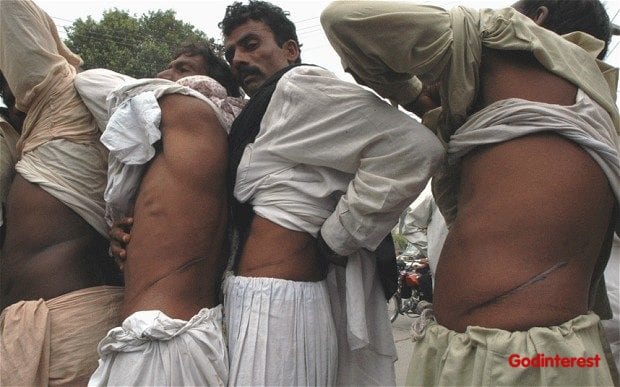
In some instances, healthy individuals are kidnapped and forced to give up an organ. Other cases showed that some people were made to believe that they need an operation and didn’t know that the organ was removed during the surgery. Some people were just desperate to make ends meet and resorted to selling an organ or two.

Organ trafficking takes place at a rate of one per hour. This was according to an estimate made by the WHO. The practice has led to five to ten per cent of the total kidney transplants around the world. Majority of the victims of organ trafficking are children from poor backgrounds or children with disabilities.

Organs sold in the black market vary in prices. A heart can cost up to £1 million.

It is not only parts for transplant that are sold illegally. There is also a market for hip, knee and whole cadavers. In the UK, it is illegal to sell any organ but that doesn’t stop desperate people offering their kidneys, lung, or a piece of their liver in exchange for a large amount of money.

Organ trafficking is an organised crime that commonly involves a recruiter, transporter, medical professionals, contractors, buyers and the banks where the organs are stored before the actual transplant. The seller usually receives the smallest portion of the take as the largest portion of the money goes to the broker, medical professionals, and towards travel expenses.

Patients who are on the transplant waiting list are tempted to buy organs illegally on the black market.

Some people who sold their kidneys have stated that they do it for the money and said that what they did save lives.

Organ trafficking should be stopped. The EU has stepped up its efforts to curb the practice in Europe. One way of doing so is to promote legal organ donation. More people should be willing to donate their organs. This is the only way to finally end the practice of illegal organ selling.


11 Valuable Lessons We Learned from Noah’s Ark

Prayer for the End of The School Year

Everything I needed to know about life, I learned from Noah’s Ark (Author Unknown)

  1. Don’t miss the boat.
  2. Remember that we are all in the same boat.
  3. Plan ahead, it wasn’t raining when Noah built the ark.
  4. Stay fit. When you’re 600 years old, someone may ask you to do something really big.
  5. Don’t listen to critics, just get on with the job that needs to be done.
  6. Build your future on high ground.
  7. For safety’s sake, travel in pairs.
  8. Speed isn’t always an advantage. The snails were on board with the cheetahs.
  9. When you’re stressed, float a while.
  10. Remember, the ark was built by amateurs; the Titanic, by professionals.
  11. No matter the storm, when you are with God, there’s always a rainbow waiting.

Now wasn’t that nice? Pass it along and make someone else smile too.

Noah’s Ark (Hebrew: תיבת נ×–’Ž’Ž; Biblical Hebrew: Tevat Noaḥ) is the vessel in the Genesis flood narrative (Genesis chapters 6–9) by which God spares Noah, his family, and a remnant of all the world’s animals from a world-engulfing flood.  In Genesis the first book of the bible, God gave Noah instructions for building the ark. Seven days before the flood, God told Noah to enter the ark with his household and the animals. The story goes on to describe the ark being afloat for 150 days and then coming to rest on the Mountains of Ararat and the subsequent receding of the waters.  The story is repeated, with variations, in the Quran, where the ark appears as Safina NÃ…«Ã¡¸¥ (Arabic: سفÙŠÙ” Ã˜© Ù” Ã™Ë†Ã˜­’Ž’Ž “Noah’s boat”). The Genesis flood narrative is similar to numerous other flood myths from a variety of cultures.


Marcus Garvey

Marcus Garvey was a Jamaican political leader and civil rights activist who advocated for the rights of people of African descent. He is best known for his vision of an independent, self-governing black nation and his promotion of the “Back to Africa” movement, which encouraged people of African descent to return to their ancestral homeland.

Garvey believed that people of African descent, who had been dispersed around the world as a result of the slave trade, needed to come together in order to achieve political and economic power. He felt that they would never be treated as equals in white-dominated societies and that their only hope for true freedom and self-determination was to create their own independent state.

He founded the Universal Negro Improvement Association (UNIA) in 1914 and worked to build a sense of pride and unity among people of African descent. Through the UNIA, he encouraged the development of businesses, schools, and other institutions that would serve the black community. He also organized a “Back to Africa” movement, which sought to establish a new nation in Africa where black people could live free from discrimination and oppression.

In addition to his work to promote the rights of people of African descent, Garvey also advocated for the rights of workers and the poor, and spoke out against colonialism and imperialism. He was a charismatic leader who inspired many people and his ideas continue to have an impact on the lives of people of African descent around the world.

It’s worth noting that Garvey’s ideas and movement also met with a lot of criticism and opposition, specially from the Jamaican political and economic elite and some black leaders.

Godinterest: The 'Christian' Version of Pinterest?

https://www.philcooke.com/godinterest/Do we really need Godinterest?  Another Christian version of a successful idea?  (Right down to the font style of the logo).  When will we start creating instead of simply ripping off the world?   I find it fascinating that God chose to introduce Himself to us in the first verse of the Bible as a ‘Creator.’  We’re made in His image, and yet we refuse to embrace that calling.  Let me know what you think, because I believe it’s high time we started leading the culture instead of doing a poor imitation. 


As seen on