
Axelos CEO Peter Hepworth in the Spotlight

Project Journal had the privilege of interviewing AXELOS previous CEO Peter Hepworth. Peter provided us with an insight into his role and AXELOS as a whole in October 2015.

AXELOS CEO Peter Hepworth

Peter joined AEXLOS as CEO in July 2013 and was previously Managing Director for Activision Blizzard  a $400 million turnover and $150million EBIT business.   In 2014, Activision Blizzard was the fifth largest gaming company in the world by revenue.

Peter is an economics graduate, chartered accountant, with an M.B.A. from Cranfield and A.M.P. from INSEAD.

What is AXELOS?

AXELOS is a joint venture set up in 2014 by the Government of the United Kingdom and Capita, to develop, manage and operate qualifications in best practice, in methodologies formerly owned by the Office of Government Commerce (OGC).

AXELOS promotes best practice frameworks such as PRINCE2 and ITIL and is developing a cyber resilience best practice portfolio later in 2015.

How does  AXELOS  differ from APM?

AXELOS is an independent organisation, allowing the user community to focus more on the content of frameworks and guidance without much interference. The firm puts a heavy focus on the guidance given, ensuring the content is fuelled by good ideas to keep the ITIL structure up to date. But while the business has a combination of access to one of Britain’s largest corporations and the UK government, more than 75% of publication sales and Prince2 certification is sold outside of the UK, a trend that is growing faster due to emerging markets.

The company varies its training approach. Its Portfolio, Programme, and Project Management Maturity Model (P3M3), for example, encourages users to assess their performance against benchmarks. Mike Acaster, PPM portfolio manager, says: “PRINCE2 is applicable to many sizes of organisation, but sometimes it’s better to be a bit more specific. It’s about tailoring advice for that context. In some cases it has been tailored, and people don’t realise it’s PRINCE2 – you have to scratch the surface.

How do you view the future of project management?

After years of being associated with large engineering and construction projects, project management has moved beyond infrastructure. Firms across different countries and sectors now acknowledge the need to manage their processes and keep costs and timing under control. As businesses begin to recognise the importance of project management worldwide, questions are being asked about the standards required. AXELOS is focusing on how these can apply to different staff and situations, as well as how workers can develop a career path in project management.

Is AXELOS popular aboard?

“It’s hard to measure the adoption of our products, but if you look at the number of exams taken, you can see strong growth outside the UK, as well as in the UK,” he says. “In the US there’s a lot of interest, and the biggest international user of PRINCE2 is the UN, to make sure their aid development is correctly managed.

“Our Managing Successful Programmes (MSP) product was used to deliver the Olympic Games. I was in Tokyo after they had won the right to host Tokyo 2020 and the focus was ‘When can we have MSP?’ They want to see the same success as London has had.”

What are  the future priorities for AXELOS?

“Career path. For the individual, it’s about how your career can develop. There’s a different skill set between project and portfolio management, and no linear route. It comes to modularisation. We have been able to offer different dimensions.

Cyber Resilience is next. Companies need to put more emphasis on improving their reactions to cyber attacks rather than continuing to focus on prevent. Although there are a number of standards and best practices in place to prevent cyber attacks, firms are still falling foul, and this is usually due to the internal attitude and people, rather than technology.

New products launched in 2015 include PRINCE2 Agile; Cyber Resilience Best Practice and Continuing Professional Development (CPD).

What’s next?

Young people are learning things online and changing how it is done. We want our members to feel proud about having AXELOS qualifications and have launched digital badges so that project professionals can display their mark of professionalism across popular social networks.

Digital badges are tokens that appear as icons and are awarded to signify learning achievements in a way that can be easily verified and shared online. Our members digital badge’s will hold and display information about their professional development activity as well as the issue date and an expiry date.

Individual workers, organisations and entire industries can benefit from badges. Badges are a new form of currency – a more transparent and efficient way to communicate the acquisition and development of workplace skills.

From AXELOS to Microsoft, IBM to Oracle, many leading companies have adopted digital badges as a form of recognition for continuing professional development and certifications. The individuals who earn these badges enthusiastically share them to LinkedIn, Twitter, Facebook and other online destinations. Once shared, anyone can verify the authenticity of and learn more about the individual’s abilities. That shareability and verification can make all the difference in a competitive job market, whether an individual aspires to move ahead in her current position or move into a different job.

We also want continued openness from AXELOS, even more community collaboration and specific actions to further increase the relevance of AXELOS in the future.

Where do you believe project management is heading?

Anyone can benefit from project management guidance. “We are all project managers now,” he says.

 

Top 10 Project Management Myths Debunked

Since the dawn of time, mankind has used myths to make sense of the uncertainty that surrounds us.  In the early 1990s  a lot of  people believed that project management was the best kept secret in business.  However,  because project management was not  seen as a  prevailing profession at that time, it suffered from a lack of awareness  which was  in a sense, a double edged sword. Those who were knowledgeable in the practice of project management became extreamly valuable to organisations and pioneers for  the profession.

These early adopters were able to convince organisations that project management practitioners were needed.  Myths around project management began to form in the business community  and as the role of the  project manager was unclear, questions were raised as to what project management was  and what it could offer organisations.

The definition of the word myth is a “widely held, but false belief or idea.” Here, we’re going to examine 10 of the most pervasive PM myths that have emerged.

Myth #1 – Contingency pool is  redundant  

This is one of the most ‘mythical’ myths that has plagued the industry  for a long time. Coupled  with the tendency to presume that ‘real work’ is tantamount to implementation or building something concrete and you have the perfect recipe for project disaster.  The thought pattern behind this approach typically originates from budget constraints and/or having unrealistic expectations. As we all know, or should know, the unexpected happens quite regularly. An effective contingency plan is important as it aims to protect that which has value (e.g., data), prevent or minimise disruption (e.g., product lifecycle), and provide post-event feedback for analysis (e.g., how did we fare? did we allocate funds correctly?).

Myth #2 – Project Management software is too expensive

If your idea of project management software involves purchasing servers, and purchasing a software application from a major vendor for a small practice with 10  practitioners  then, yes, it  is too expensive. If, however, you have gone cloud and elected to use a powerful web-based project management solution (such as Smartsheet), then you are likely to save thousands of pounds while reaping the benefits of a pay-as-you-go price structure. The present, and future, lie in cloud solutions that provide equal, or superior, functionality at a fraction of the cost.

Myth #3 – Project Management methodologies will slow us down

Project  managers  have  a reputation of using  process-intensive  methodologies  that favour ideology over pragmatism. In some instances this may, indeed, be the case when  there is a mismatch between a specific project management approach and the organisation’s acutall needs (e.g., a process-driven method, such as PRINCE2, may not be appropriate for a slightly chaotic environment that favours an adaptive approach, such as Scrum). So, in sum, put down the paint roller (“Project Management isn’t for us!”) and take out your fine-bristled brush (“The Critical-Chain method may not be our cup of tea, but Agile on the other hand”¦”).

Myth #4 – Facts and figures are more important than feelings and perceptions

While facts are very important, projects are often derailed and sabotaged because of false perceptions.  The PM must pay attention to both fact and fiction to navigate through turbulent  organisational change.

Myth #5 – Project managers need to be detail oriented and not strategic in nature

While it is of the utmost importance for the project manager to understand how to read the details of the project, they must also understand how the project supports organisational objectives.  Having a strategic perspective adds great value to the skill-set of the project manager.

Myth #6  Rely on the experts in everything that you do

It is true, we do need to rely on the experts but our trust can not be a blind faith.  The job of the project managers in this area is twofold.  First we must extract information and second we must verify that the information is accurate.  A good example of this is asking a planner  to provide an estimate on the effort required to perform a task.  In some instances team members forget to include tasks which ultimately results in a faulty estimate.

Myth #7  All the battles have to be fought and won so that we can succeed

Project managers sometimes make the assumption that they need to stand firm to get the job done, however, coming to compromise  on a particular issue is often a better course of action  in order to  win the war.

Myth #8 Project Managers  can wear multiple hats  

Wearing different hats can be extremely confusing.  This is especially true if the project manager is asked to be a business analyst or technical expert on top of serving in their PM role.  They end up doing  both roles with mediocrity.  When we “wear two hats” we essentially tell ourselves that both hats fit on one head at the same time. However, what happens if the demands of two roles conflict  and what assurances do we have that we’re managing the inherent conflict of multiple roles  and the  risks the  roles introduce? Sadly, multiple roles become more common as we move up the management hierarchy in an organisation, and that’s exactly where potential conflicts of interest can do the most harm.

Myth #9  Once the risk register is created, it’s full speed ahead

Risk management provides a forward-looking radar. We can use it to scan the uncertain future to reveal things that could affect us, giving us sufficient time to prepare in advance. We can develop contingency plans even for so-called uncontrollable risks, and be ready to deal with likely threats or significant opportunities.  Too often, it’s not until a catastrophic event occurs and significantly impacts project progress that ongoing risk reviews are conducted.

Myth #10 Project managers can not be effective in their role unless they have specific technical expertise in the given field that the project falls  within

You don’t need to be an engineer to manage a construction project or a IT  technician to manage a software development project.  All you need is a  fundamental  understanding with strong PM skills to manage  the team.  Experience in the field helps but does not guarantee success.

Project management is challenging enough without the myths. The profession has come a long way since the 1990s and some of these myths are fading. However, we still see remnants of them in one form or another.  Great projects cut through false assumptions and confusion, allowing their teams to make smart decisions based on reality.

These are just 10 project management myths, what are yours?  

13 Basic Facts You Should Know about Modular Homes

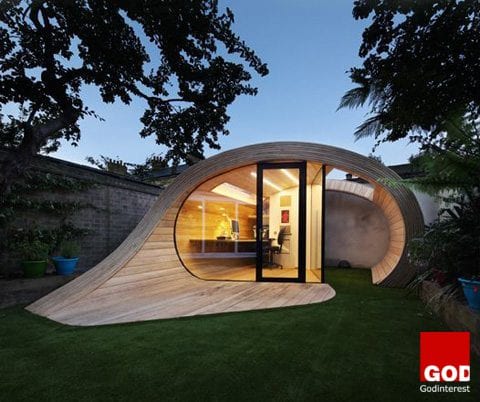
The concept behind a tiny garden pavilion in London, UK was simplified by the following equation: shed + office = Shoffice.

Modular homes sometimes referred to as “factory-built construction“,  encompass a category of housing built in sections typically at a factory  location.   These houses must conform to local and regional building  codes for the country the buyer plans to situate the dwelling.  

Just like site-built housing, construction teams build modular homes to  last and increase in value over time.   As the factory finishes building sections of the house, each piece is transported to the homeowners build site on large truck beds.   Local building contractors then assemble the house and inspectors ensure the manufacturer has built your residence to code.   Most customers find that modular housing is less expensive than  site-built homes.

modularhomes7

1. Benefits of Construction

One of the benefits of  construction is that manufacturers build them indoors in an enclosed factory setting, where the materials  used to build the homes are not subject to adverse weather during construction.  

Most building contractors can finish erecting a house in as little as 1-2 weeks, though it may take up to 4 weeks or more for local  contractors to finish building the dwelling on-site once it has been  delivered.

modularhomes9

2. Differences Between Modular and Site Built

Modular homes are not the same as site-built homes, which contractors create 100% at the build site.   That means the
contractor must collect all the materials for a house and built it on-site.   Like a modular home, the site-built home must conform to all regional, state and local building codes.   Many refer to site-built construction as stick-built homes.   Stick built housing is also well-built and designed to last a lifetime.

modularhomes2

3. Difference Between Modular and Manufactured

modularhomes14
Manufactured housing is another form of factory construction.   Many  consumers have mistakenly referred to these homes in the past as mobile homes.   Others refer to manufactured homes as trailers.   Manufacturers do build these houses in a factory like modular homes on a steel chassis.  

The manufacturer then transports sections of the home to the building site as completed.   These dwellings are usually less expensive than both modular housing and site built housing, in part because they don’t come with a permanent foundation.   Trailers and mobile homes are more likely to depreciate than modular or site built homes.

4, Advantages of Modular Construction Over Site Built

Modular homes offer many advantages over traditional site built dwellings. Many consider modular homes a hybrid breed of housing.   Not a manufactured house and not a site built house, these homes offer consumers multiple benefits including costs savings, quality and convenience.   In many ways modular homes surpasses site built housing in quality and efficiency.  

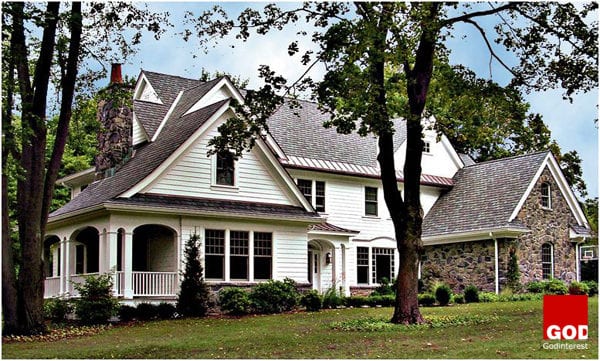
Modulars have grown up. They are more and more becoming a mainstream  selection for first time and secondary homebuyers.   Most people now realise they don’t’ have to give up design quality or customization to buy a prefabricated house.   One of the biggest misconceptions people have of prefabricated housing is they are look alike.   “Boxy” is not a word that can begin to describe prefab dwellings. In fact, more suitable descriptions of these buidlings would include: “Elegant, durable, customised and high-class”.   Many people find they can afford to include more specialization and customization when they buy a factory built house over a traditional stick built construction.  

modularhomes41

5. Cutting-edge Designs

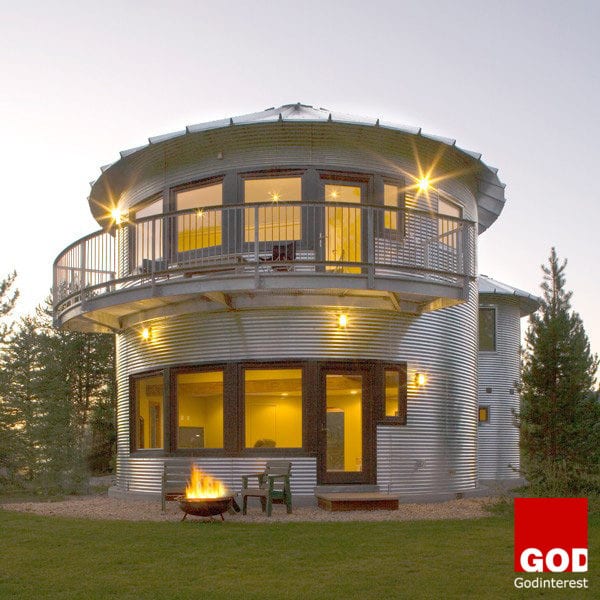
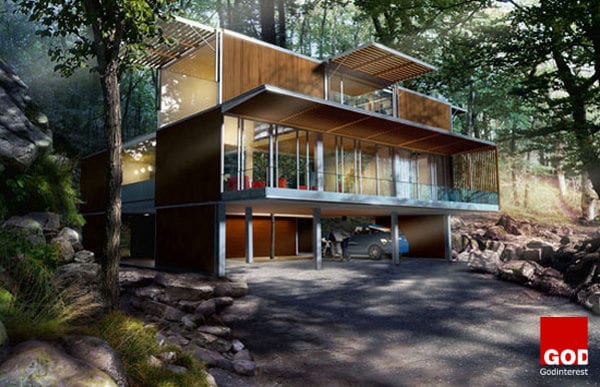
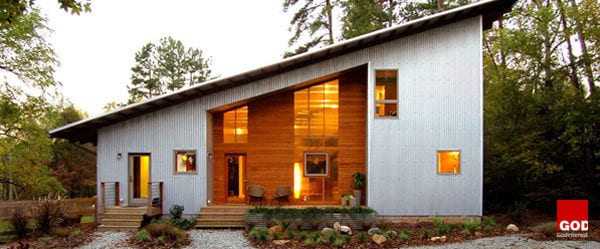
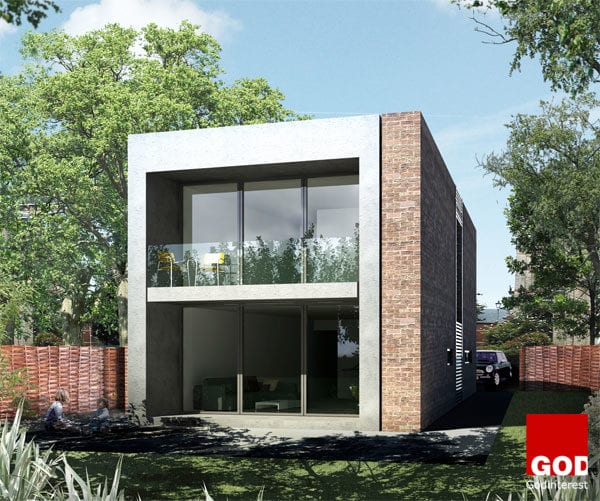
Looking for a building design with a little pizzazz?   You need to check out the latest architectural designs associated with prefabricated buildings.   Firms are now building more    elegant and unique designs to meet the increasing demands of selective customers.   People are selecting modular designs over stick built designs to build their dream homes.

green-prefab-homes-contemporary-ideas-on-home-design-ideas

6. Customised Design and Modification

There are hundreds of companies that offer modular prefabricated construction kits and plans, and most employ various architects and specialized designers to help customize your  home.   That means you have more choices and a wider selection of designers to choose from.   If you don’t find a style you like with one designer you can often move onto another, without even switching  manufacturers.  

green-prefab-homes-contemporary-ideas-on-home-design-ideas

7. Huge Range of Selection

Its always best to select a home that matches your lifestyle and design preferences.

8. Rapid Customisation  

These are often the ideal selection for homeowners in need of a speedily designed homes.   You simply can’t build a dwelling faster.   Site built housing can take months to design and build.   A manufacturer can design and place a prefab house in a few short weeks. You can pick from just as many different styles as you would a site built home if not more, but don’t have to wait weeks for contractors to build your custom house.

9. Precise Budgeting and Timing

Yet another benefit of these designs is the lack of guesswork involved.   You don’t have to worry about how something will look.   You know that everything will arrive to the build site complete and you will know the exact outcome. You also don’t need to worry about unexpected expenses, which is commonly the case with site built homes.   With a prefabricated house, you know exactly what your home will cost and can control that cost from the point of buying to final construction.   This isn’t the case with stick built housing. With stick built housing you also have to worry about surprises in the middle of construction.   It isn’t uncommon for example, for a contractor to quit in the middle of a project.   If this happens you have few choices.  

Your home will sit partially built until you are able to find a new construction team.   This alone may cost you valuable time and money.  

10. Improved Energy Efficiency    

Many prefab houses also come with what manufacturers call the “Energy Star” certification.   This is a national company that promotes energy efficiency.   Buildings with this label use 30-40 percent less energy yearly than traditional stick built housing.  

This saves you time and money.   Some key features of prefabricated housing that help improve energy efficiency include tight installation,  high performance and weather resistant windows, controlled air systems and duct systems, upgraded air-conditioning and heating units and use of efficient lighting and heating appliances.   As a bonus, these features not only save on annual energy costs but also improve the quality of your indoor air. Think energy efficiency isn’t significant?   Think again.   Over the lifetime of your house you could save thousands of pounds  in energy bills by buying a prefabricated dwelling.

11. Design Modification is Easier  

Most prefab homemakers now use computer aided design systems when conducting operations.   This adds to the efficiency of construction and improves the appearance and architecture  of homes.   Prefabricated construction ranges from plain vanilla styling to intricate and complex modern designs.

12. On Time and  on Budget    

Perhaps the two biggest features or benefits of prefabricated housing that manufacturers hone in on are the speed that  they can be built with and the competitive pricing they can offer on the final product.   This is one reason that modular homes are gaining popularity.  

13. Appreciate in Value

These dwellings also appreciate much like site  built housing designs.   Most homeowners are interested in building value in their house over time.   Prefab housing afford you the opportunity to do this (keep in mind however much appreciation is dependent on real estate location).   Select a good build site and your house will gain significant value over time. Other factors may also affect appreciation including landscaping and how well the house is cared for year after year.   These factors also affect site built housing.   Unlike mobile homes, which depreciate, a modular homeowner can expect to gain value from their home year after year. Study after study suggests that modular homes appreciate just as well as site built homes.   They are also just as easily insured and financed.

As far as risk goes, you are no more at risk buying prefabricated housing than site built construction.

Modular Home Facts

  • Modular homes appraise the same as their on-site built counterparts do.
  • Modular homes can be more easilly customised.
  • Most modular home companies have their own in-house engineering departments that utilize CAD (Computer Aided Design).
  • Modular home designs vary in style and size.
  • Modular homes are permanent structures – “real property.”
  • Modular homes are considered a form of “Green Building.”
  • Modular homes are faster to build than a 100% site-built home.
  • Home loans for modular are the same as if buying a 100% site-built home.
  • Insuring your modular home is the same as a 100% site-built home.
  • Modular homes can be built to withstand 175 mph winds.
  • Modular homes can be built for accessible living and designed for future conveniences.


Would you consider a modular home for yourself, or are you more of a traditionalist?


As seen on